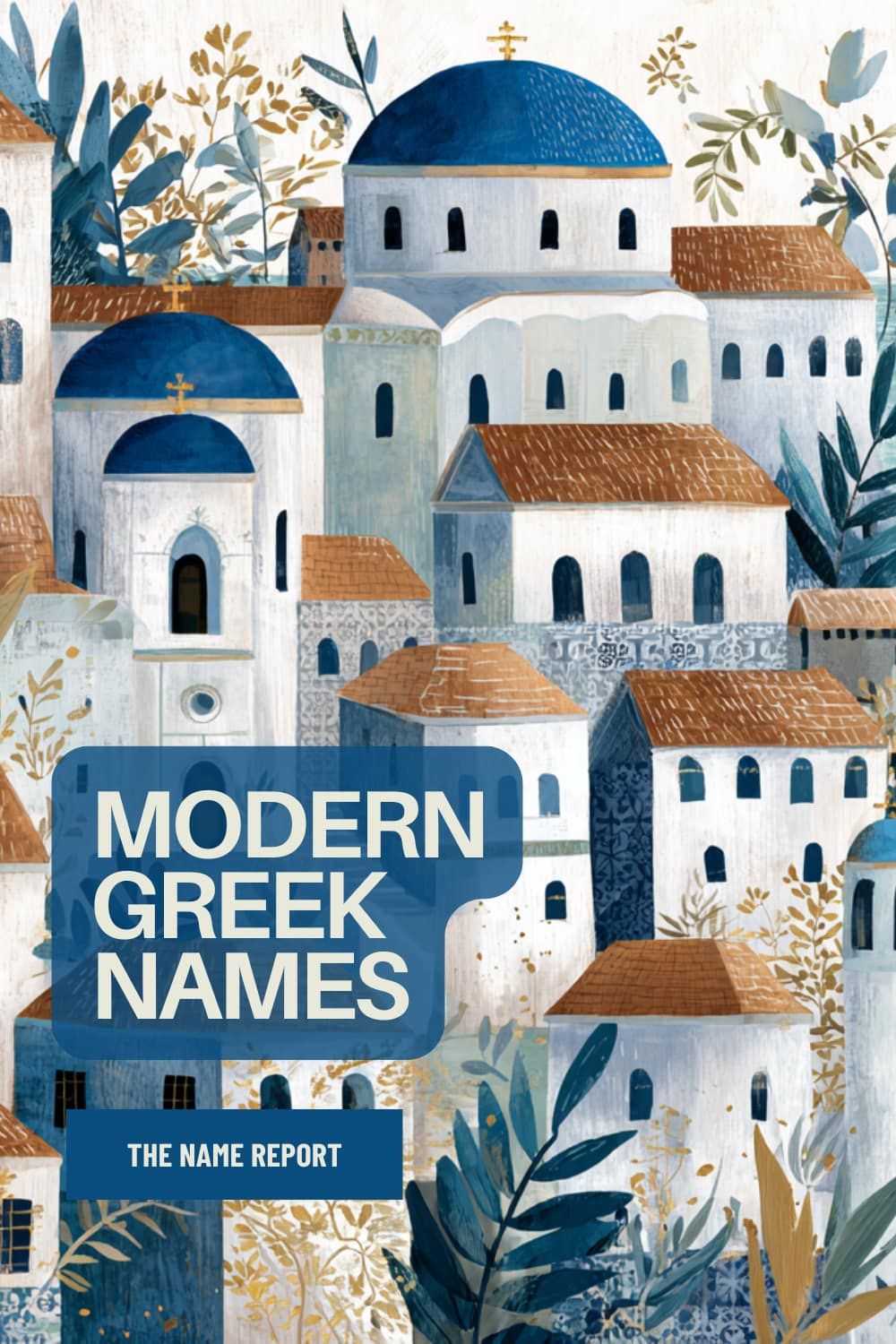
There's a massive gap between Greek mythology names (which we all know and have strong opinions about) and the names that fill Greek birth certificates. Modern Greek naming isn't always about gods and goddesses. It's about Orthodox saints, family lineage, and a culture that's been actively building an identity separate from ancient history for the past two centuries. It's about looking at your grandmother's name and deciding whether to honor it directly or give it to your kid in a contemporary form. It's about names that work in both Greek and English, that carry cultural weight without requiring a mythology degree.
Modern Greek names are having a moment because they offer something the mythology crowd doesn't: they're rooted in living tradition, not historical fantasy. They carry contemporary cultural meaning. They sound sophisticated in any language. And they're chosen by people who actually understand Greek culture, not just Greek aesthetic.
How Modern Greek Naming Works
Greek naming tradition is deeply connected to Orthodox Christianity and family obligation. The first son was traditionally named after the paternal grandfather; the first daughter after the maternal grandmother. This created a specific naming ecosystem—names were recycled through generations, which meant the pool of "acceptable" names was smaller and more intentional than in Anglo naming culture.
That tradition has loosened in contemporary Greece, but it still shapes naming choices. Parents are increasingly breaking from strict patrilineal naming (the first son doesn't have to be named Dimitri just because his grandfather was), but they're still thinking about family, about honoring lineage, about what it means to carry a name that has weight in your family history.
Modern Greek names tend to be softer than their ancient counterparts. They sound contemporary without being trendy. They work across languages because Greeks have been diaspora-conscious for centuries—you choose names that work in both Greek and English, that don't require endless pronunciation corrections, but that still carry cultural specificity.
Girl Names From Modern Greek Culture
Yiota (YO-tah, Greek) — Short for Ioanna, it's got that diminutive quality that makes it feel approachable without being babyish. In contemporary Greece, it's the name of someone who's got style—it's got a kind of effortless sophistication. It's genuinely hard to pronounce if you don't speak Greek, which actually adds to its charm. It's the name of someone who doesn't explain themselves.
Marianna (mah-ree-AH-nah, Greek) — More elaborate than Maria, it carries that Orthodox tradition without feeling heavy. Marianna has been popular for decades in Greece, which means it's got staying power. It's substantial enough to age well from playground to boardroom. Contemporary without being trendy.
Eleni (eh-LEH-nee, Greek) — Helen without the heavy classical baggage. Eleni is what happens when you update a traditional name for the contemporary moment. It's got that gentle musical quality while remaining grounded. In Greece, it's timeless. Everywhere else, it sounds like you understand Mediterranean culture.
Sophia (so-FEE-ah, Greek) — Meaning "wisdom," it's become almost too popular internationally, but in Greek context it carries genuine depth. It works because it actually means something philosophically—parents choosing Sophia are choosing intentionality, not just aesthetics. It's the name of someone thoughtful.
Konstantina (kon-stan-TEE-nah, Greek) — The feminine form of Konstantin, it carries that formal elegance without being stuffy. It's got that quiet luxury quality that appeals to contemporary parents. Long enough to be substantial, short enough to have a good nickname (Kiki, Tina).
Athena (ah-THEE-nah, Greek) — Okay, mythology adjacent, but in contemporary Greece, Athena is used as a regular girl's name, not as a statement about ancient history. It's got staying power because it actually works as a name, not just as a reference. Contemporary Greek parents name their daughters Athena because it sounds beautiful and carries cultural weight, not because they want to make a point about wisdom and warfare.
Melina (meh-LEE-nah, Greek) — Meaning "honey," it's got that nature-coded sweetness without being precious. Melina Mercouri made it iconic as an artist and political figure; contemporary parents choose it because it sounds both contemporary and rooted. It works beautifully across languages.
Alessandra (ah-les-AHN-drah, Italian-Greek) — Used throughout Mediterranean culture, it's got that classical elegance without being overwrought. In Greek families, it's chosen for its sophistication and its connection to both Greek and Italian heritage. It ages from childhood to adulthood effortlessly.
Nadia (NAH-dee-ah, Russian-Greek) — Used throughout Orthodox Christian cultures, it means "hope." In contemporary Greece, it's chosen because it carries both cultural weight and hopefulness without being sentimental. It's the name of someone grounded but forward-looking.
Boy Names From Modern Greek Culture
Dimitri (dih-MEE-tree, Greek) — The most traditional Greek name, it's still being chosen by contemporary parents because it works. It sounds sophisticated in English, it carries family lineage in Greek, it's got that older-soul quality without being dated. Dimitri is the guy you trust.
Stavros (STAH-vros, Greek) — Meaning "cross," it's deeply connected to Orthodox tradition without being heavy-handed about it. Stavros carries that Mediterranean warmth. It's less common outside Greece, which means it stands out—the kind of name chosen by parents who are genuinely connected to Greek culture.
Kostas (KOS-tas, Greek) — Short for Konstantinos, it's got that casual sophistication. Kostas sounds like someone who could be a musician, a philosopher, or both. It's got that effortless cool without trying. In Greece, it's timeless; everywhere else, it signals cultural specificity.
Nikos (NEE-kos, Greek) — Short for Nikolaos, it's the name of victory and conquest, but used casually. Nikos is contemporary without being trendy. It's the name of someone who knows what they want without needing to announce it.
Spiros (SPEER-os, Greek) — Meaning "spirit," it carries that philosophical weight. Spiros is less common outside Greece, which gives it genuine distinction. It's the name chosen by parents who understand Greek culture deeply and want their kid to carry that heritage.
Yiannis (YAH-nis, Greek) — The Greek form of John, it's got that casual warmth. Yiannis carries both traditional weight (Johns have been around forever) and contemporary cool. It works across gender and cultural lines when you understand its flexibility.
Alexandros (al-ex-AHN-dros, Greek) — The full form of Alexander, it carries that classical weight without being pretentious. In contemporary Greece, it's chosen because it's substantial, because it ages well, because it means something beyond just sounding good.
Pavlos (PAHV-los, Greek) — Paul in Greek form, it carries Christian tradition without announcing it. Pavlos has that quiet strength—the name of someone grounded but not stuck.
Giorgos (YOR-yos, Greek) — George in Greek form, it's got that timeless quality. Giorgos carries both historical weight and contemporary ease. It's the kind of name that works in any decade.
Gender-Neutral Names With Greek Modern Identity
Nikias (NIK-ee-as, Greek) — Can work across gender in Greek culture, it carries that victory-coded meaning with sophistication. It's genuinely androgynous without feeling forced.
Zephyr (ZEF-er, Greek) — The god of the west wind, but used in contemporary naming as an actual name choice, not mythology reference. It's got that nature-coded fluidity without being precious. It works for anyone.
Alexios (ah-LEX-ee-os, Greek) — Can be shortened to Alex, it's got that classical flexibility. In Greece, Alexios is genuinely used for all genders in contemporary contexts. It carries that intellectual weight without being affected.
The Orthodox Tradition Without the Weight
Here's what separates modern Greek naming from the heavy traditionalism some people imagine: contemporary Greek parents are choosing tradition, not just inheriting it. They're deciding to name their kids after saints or grandparents because they understand the meaning, not because they have to.
This means the names carry intention. They're not trying to prove anything about ancient Greece. They're not compensating for cultural loss. They're just genuinely grounded in a living tradition that makes sense to the parents choosing them.
Names like Eleni and Kostas and Melina work because they exist at the intersection of Orthodox tradition and contemporary culture. They're rooted without being heavy. They carry meaning without requiring explanation.
When to Choose a Modern Greek Name
Modern Greek names work best when they're chosen because you actually understand what they mean. If you're Greek, obviously this is your heritage—you're either honoring family tradition or deliberately choosing to break from it with intention. If you're not Greek, you need to understand that these names come with cultural specificity. They're not just pretty sounds. They're connected to Orthodox Christianity, to family lineage, to a specific cultural moment.
The best modern Greek names are chosen by people who either have actual Greek heritage or who've spent time in contemporary Greek culture and understand what these names mean. That might be through living in Greece, through family connections, through serious engagement with Greek literature and film. It means understanding that naming is cultural transmission work, and that these names aren't just aesthetics—they're identity.
Check out our guides on names that work across languages, or explore how to choose names that age well. Modern Greek names excel in both categories. They're rooted in something real, which is why they endure.
Your Name Report
Ready to find your modern Greek name? Take The Name Report's Personalized Name Report to discover names that align with your values, cultural background, and the future you imagine for your child. Get Your Personalized Name Report