Both feel magical. Both suggest something beyond the ordinary, something that exists between worlds. But ethereal names and fae names are coming from completely different magical traditions.
Ethereal names suggest transcendence—floating above the world, celestial presence, spiritual connection. They feel like someone who exists slightly outside normal reality through elevation.
Fae names suggest folklore—ancient, trickster energy, dangerous beauty, playful mischief. They feel like someone who exists slightly outside normal reality through wildness.
One is about ascending. One is about existing outside the rules entirely.
The distinction matters because it reveals what kind of “different” you want your child to be.
The Core Distinction: Elevated vs Untamed
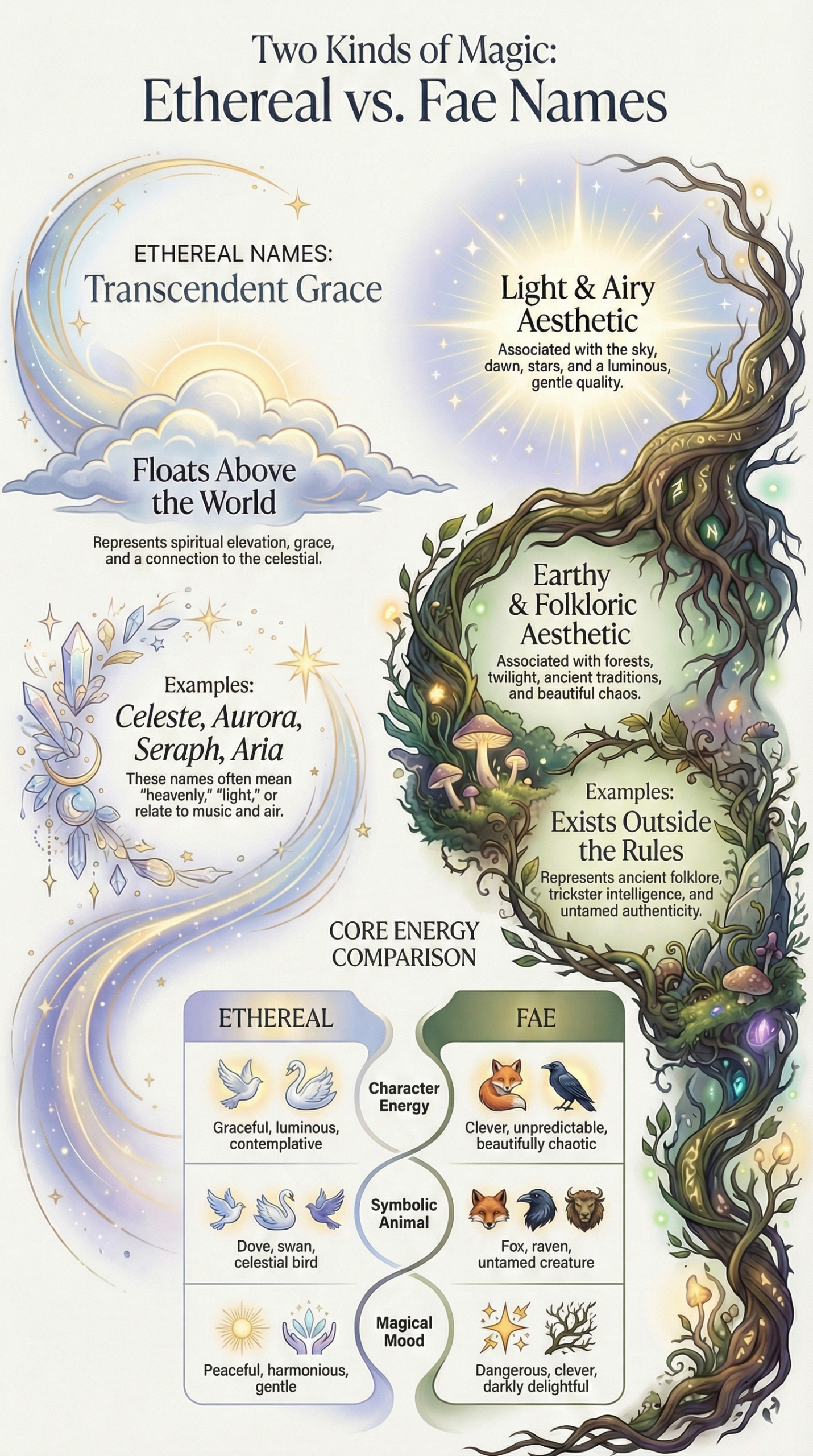
| DIMENSION | ETHEREAL | FAE |
| Type of Magic | Spiritual, celestial, transcendent | Folkloric, ancient, trickster energy |
| Otherworldly Quality | Elevated, floating, heavenly | Wild, dangerous, playfully mischievous |
| Character Energy | Graceful, luminous, contemplative | Clever, unpredictable, beautifully chaotic |
| Aesthetic | Light, airy, celestial | Forest, twilight, liminal spaces |
| Cultural Root | Universal spirituality, celestial imagery | European folklore, ancient traditions |
| How They Exist Outside Normal | Through transcendence and elevation | Through wildness and refusal of rules |
| Names Feel Like | Someone who belongs in the sky | Someone who belongs in the woods |
| Symbolic Animal | Dove, swan, celestial bird | Fox, raven, untamed creature |
| Risk | Can feel precious if not grounded | Can feel try-hard if executed without nuance |
| Examples | Celeste, Aurora, Seraph, Aria | Rowan, Lark, Puck, Iridian |
| Magical Mood | Peaceful, harmonious, gentle | Dangerous, clever, darkly delightful |
| Values Signaled | Spirituality, transcendence, grace | Authenticity, wildness, intelligent chaos |
Ethereal Names: Transcendent, Celestial Presence
Ethereal names suggest someone who exists on a higher plane—spiritually, intellectually, emotionally elevated. The magic is in the transcendence, the floating above ordinary reality.
The Philosophy: You’re naming toward spiritual elevation. Your child carries a name that suggests someone graceful, luminous, and slightly removed from the ordinary world. The magic isn’t mischief—it’s grace. It’s the understanding that some people exist slightly above the chaos, floating in their own ethereal space.
What makes a name ethereal:
- Celestial or spiritual in origin
- Light, airy sound quality
- Often means related to heaven, light, sky, or spirituality
- Graceful and contemplative
- Suggests gentle elevation above ordinary reality
- Often appears in celestial names, light names, or spiritual names
Names that embody ethereal energy:
Celeste (seh-LEST) — Latin for “heavenly.” Ethereal because the name literally means celestial and sounds like floating. The energy is elevated and graceful.
Aurora (aw-ROR-uh) — Roman goddess of dawn, names that mean light. Ethereal because it suggests the moment between night and day—transcendent and luminous.
Seraph (SER-af) — Angel, heavenly being. Ethereal because the name is directly tied to spiritual transcendence. The energy is grace.
Aria (AHR-ee-uh) — Musical term, also means “air.” Ethereal because it suggests flowing, weightless presence. The energy is floating and light.
Elara (eh-LAHR-uh) — Star name (moon of Jupiter), celestial. Ethereal because the name carries celestial weight and graceful presence.
Lyra (LY-ruh) — Constellation, musical instrument. Ethereal because the name is tied to both sky and music—transcendent elements.
Alastair (al-uh-STAIR) — Greek origin meaning “defender,” but sounds ethereal and contemplative. The energy is elevated and thoughtful.
Elowen (el-OH-wen) — Cornish for “elm tree,” but sounds ethereal and magical. The name carries spiritual presence without being precious.
Caelum (KY-lum) — Latin for “sky.” Ethereal because the name is the sky itself—transcendent and elevated.
The Strength of Ethereal: These names carry grace. They suggest someone who floats through life with elegance and spiritual presence. A child named Aurora carries that invitation to transcendence, to existing with grace above the chaos.
Fae Names: Folkloric, Trickster Magic
Fae names suggest someone who doesn’t follow ordinary rules—because they’re from outside the ordinary world. The magic isn’t gentle elevation; it’s intelligent mischief, dangerous beauty, playful chaos rooted in ancient traditions.
The Philosophy: You’re naming toward wild authenticity. Your child carries a name that suggests someone who exists outside normal rules through their own nature, not through transcendence. The magic is in the refusal to be ordinary, in the clever dangerous beauty of folklore.
What makes a name fae:
- Rooted in folklore, mythology, or ancient traditions
- Often short, sharp, or distinctive
- Suggests intelligent mischief or wildness
- Dangerous beauty, not gentle elevation
- Often appears in fae names, witchy names, or names from folklore
Names that embody fae energy:
Rowan (ROW-un) — Tree name, but also folklore-rooted (protection tree in Celtic tradition). Fae because the name carries ancient folkloric power and wildness. Not elevated—wild.
Lark (LARK) — Bird name, but the energy is trickster. Fae because the name suggests someone swift, clever, and unpredictable. The magic is in mischief.
Puck (PUK) — Shakespeare’s A Midsummer Night’s Dream, mischievous spirit. Fae because the name is literally a trickster figure. The magic is in chaos and clever disruption.
Iridian (ee-RID-ee-un) — Potentially fae-inspired, shimmering quality but grounded in wildness. The energy is folkloric and otherworldly without being ethereal.
Hazel (HAY-zul) — Tree name, but with fae energy when positioned through folklore. The name carries earthy wildness, not celestial elevation.
Thorn (THORN) — Sharp, dangerous, beautiful. Fae because the name carries the dangerous beauty of ancient tradition. The magic is in refusal to be soft.
Raven (RAY-vun) — Mythology, intelligence, darkness. Fae because the name carries ancient power and trickster intelligence. The magic is in knowing, not in grace.
Merlin (MER-lin) — Arthurian legend, powerful wizard. Fae because the name carries ancient magical tradition. The energy is powerful and outside ordinary rules.
Brigid (BREE-jid) — Celtic goddess, fire and craft. Fae because the name is rooted in ancient tradition and creative power. The magic is in skill and fire.
The Strength of Fae: These names carry wildness. They suggest someone who refuses ordinary reality not through elevation but through their own untamed nature. A child named Lark carries the invitation to cleverness, to existing outside rules through intelligence and mischief.
Ethereal vs Fae: What Kind of Magic Are You Inviting?
Ethereal magic is about transcendence. It’s the magic of floating above the world, of existing in grace and spiritual presence, of being elevated beyond ordinary chaos. The child is special because they exist on a higher plane.
Fae magic is about wildness. It’s the magic of existing outside ordinary rules, of ancient tradition and trickster intelligence, of beautiful dangerous chaos. The child is special because they refuse ordinary reality entirely.
Both are magical. They’re just different kinds of magic.
When to Choose Each
Choose Ethereal if:
- You value grace and spiritual elevation
- You’re drawn to celestial aesthetics and spiritual connection
- You want a name that suggests someone graceful and luminous
- You’re naming toward “this child will float above the chaos with grace”
- You prefer the magic of transcendence over the magic of wildness
Choose Fae if:
- You value wildness and ancient tradition
- You’re drawn to folkloric aesthetics and witchy sensibility
- You want a name that suggests someone clever and beautifully chaotic
- You’re naming toward “this child will exist outside ordinary rules through their own nature”
- You prefer the magic of wildness over the magic of grace
Internal Connections
Both ethereal and fae sit within broader naming frameworks:
- Ethereal connects to: Celestial Baby Names, Names That Mean Light, Spiritual Names, Names That Mean Star, Names That Feel Heavenly
- Fae connects to: Fae Names, Witchy Names, Dark Academia, Names That Mean Magic, Wilderkind Names
The distinction helps you understand: are you naming toward spiritual elevation or toward wild authenticity?
The Meta-Insight: What Kind of “Different” Are You Inviting?
Both ethereal and fae names invite your child to exist outside ordinary reality. They’re just inviting them in different ways:
Ethereal: “Float above ordinary reality through grace and spiritual presence.”
Fae: “Exist outside ordinary reality through your own wild, authentic nature.”
Understanding which kind of magic resonates with you reveals what you actually value and what kind of “special” you want for your child.
Get Your Personalized Name Report
Drawn to magical names but unsure whether ethereal grace or fae wildness resonates more? Want to understand what kind of magic you’re inviting? Get your Personalized Name Report at https://app.thenamereport.com/ and discover which magical tradition authentically calls to you.