The Specific Aesthetic We're Talking About
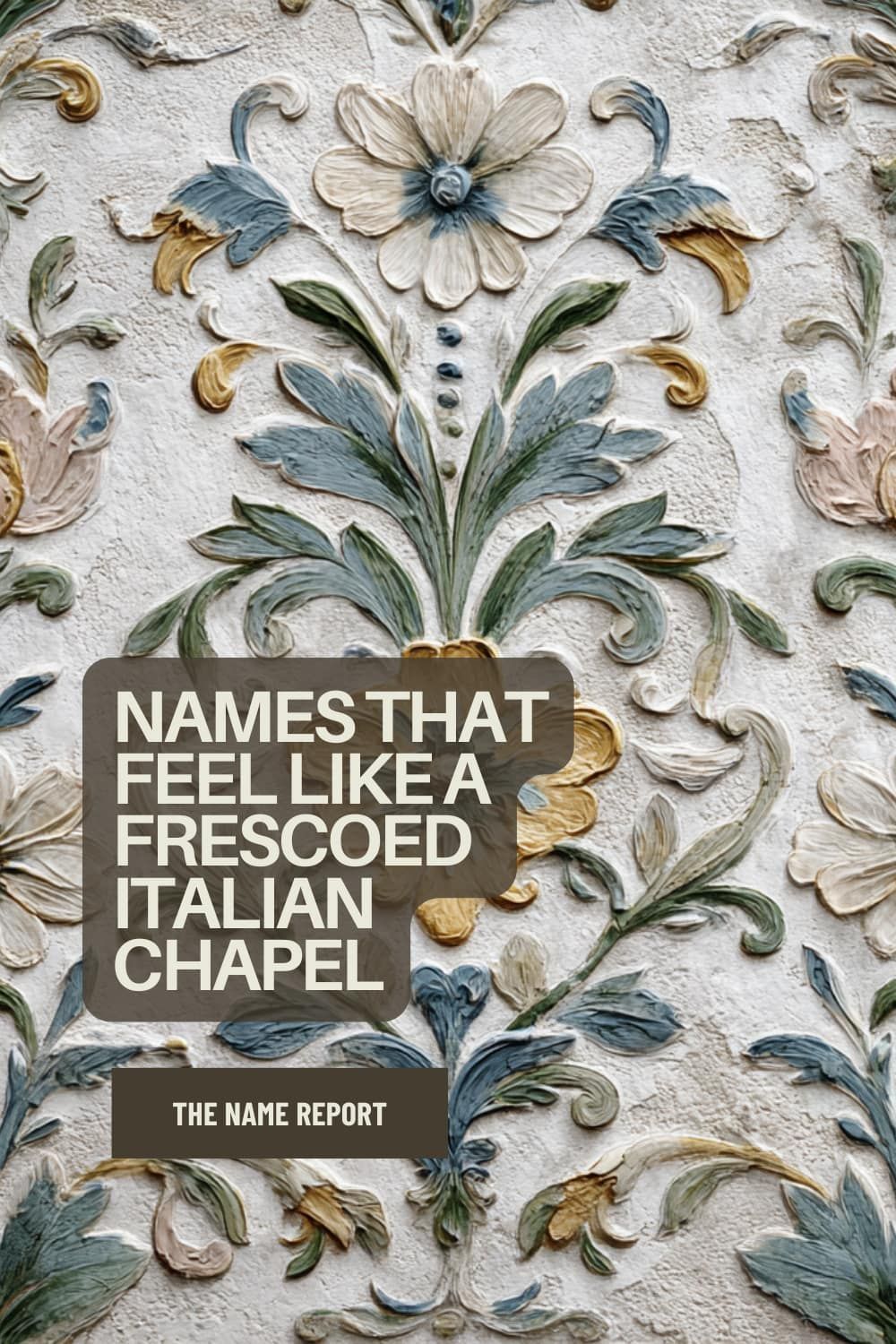
Imagine walking into an Italian chapel. The light comes through old windows, filtered and soft. The frescoes on the walls are hundreds of years old—still beautiful, but faded, worn, somehow more beautiful for the wear. There's silence. There's spiritual weight. There's the sense of being held by something much larger than yourself, something that has lasted centuries.
That's the aesthetic we're capturing in names.
When parents ask for names that feel like a frescoed Italian chapel, they're seeking something very specific: romance without saccharine sweetness, history without costume, beauty that comes from age and patina rather than polish and newness. They want their daughters to carry the sense of being rooted in something ancient and beautiful. They want names that sound like they belong to someone who understands that old things have their own kind of radiance.
This aesthetic is different from the used bookstore literary names. Those whisper intellectual depth. These sing spiritual beauty. They're less about reading and thinking, more about feeling and being. They're about understanding that beauty doesn't need to be new. That tradition carries its own romance. That a name can sound like it belongs in a Renaissance painting.
What Actually Makes a Name Feel Like a Frescoed Chapel
Before we dive into specifics, let's define the aesthetic clearly. When a name feels like it belongs in a frescoed Italian chapel—has that soft, old light quality—specific things are happening:
Romance without sentimentality. The name carries romance, but not the precious kind. It's genuine. It's rooted in something real—history, spirituality, cultural weight.
Spiritual resonance. The name carries spiritual weight. Not necessarily religious, but sacred in some way. It suggests something larger than the individual.
Vintage European sensibility. The name feels rooted in European tradition—Italian, Spanish, French, Portuguese, Greek. It carries the weight of old culture, old art, old spirituality.
Beauty through patina. The name is beautiful precisely because it shows its age. It doesn't try to be new or trendy. It's comfortable being old.
Artistic sensibility. The name suggests someone who understands art, beauty, culture. Someone for whom aesthetics matter.
Depth without darkness. The name carries depth—it's not light or superficial—but it's not moody or dark. It's contemplative. It's warm.
Italian Girl Names: The Heart of This Aesthetic
These names are rooted in Italian tradition and carry the frescoed chapel aesthetic most directly.
Caterina (Greek, kah-tuh-REE-nuh) — The Italian form of Catherine. Carries spiritual weight through Saint Catherine. Three syllables, romantic, carries history beautifully. Works across ages.
Alessandra (Greek, ah-les-AHN-druh) — Italian form. Carries historical and artistic weight. Four syllables, elegant, deeply romantic. Works beautifully.
Giulia (Latin, JOO-lee-uh) — Italian form of Julia. Two syllables, romantic, carries history. Works beautifully.
Lucia (Latin, LOO-chuh) — Italian form. Means "light." Two syllables, carries spiritual resonance and meaning. Works beautifully. Particularly associated with Italian spirituality.
Beatrice (Latin, bee-AH-triss) — Italian through Dante. Carries philosophical and romantic weight. Three syllables, deeply connected to Italian literary tradition. Works beautifully.
Margherita (Greek, mar-ger-EE-tuh) — Italian form of Margaret. Four syllables, romantic, carries artistic and floral weight (means "daisy"). Works beautifully.
Rosalba (Latin, ro-ZAHL-buh) — Italian, means "white rose." Combines floral and spiritual weight. Three syllables, romantic, carries history. Works beautifully.
Bianca (Italian, bee-AHN-kuh) — Means "white." Italian elegance, carries history through Shakespeare and others. Two syllables, romantic. Works beautifully.
Gianna (Hebrew, jee-AHN-uh) — Italian form of Jeanne/Jane. Two syllables, simple elegance, romantic warmth. Works beautifully.
Isadora (Greek, iz-uh-DOR-uh) — Means "gift of Isis." Carries artistic weight through Isadora Duncan. Three syllables, romantic, deeply aesthetic. Works beautifully.
Vittoria (Latin, vit-TOR-ee-uh) — Italian form of Victoria. Four syllables, carries victory and spiritual weight. Romantic and strong. Works beautifully.
Celestina (Latin, sel-es-TEE-nuh) — Italian form. Means "heavenly." Four syllables, carries spiritual and romantic weight. Works beautifully.
Angelica (Latin, an-JEL-i-kuh) — Italian form. Means "angelic." Four syllables, carries spiritual weight. Romantic without being precious. Works beautifully.
Francesca (Germanic, fran-CHES-kuh) — Italian form. Carries artistic weight through Dante (Francesca da Rimini). Three syllables, deeply romantic. Works beautifully.
Serafina (Hebrew, ser-uh-FEE-nuh) — Italian form. Means "fiery." Four syllables, carries spiritual weight. Romantic and beautiful. Works beautifully.
Simonetta (Hebrew, si-moh-NET-uh) — Italian diminutive. Carries Renaissance weight (Simonetta Vespucci). Four syllables, romantic, artistic. Works beautifully.
Celia (Latin, SEE-lee-uh) — Simple Italian form. Two syllables, elegant, carries romantic weight. Works beautifully.
Valentina (Latin, val-en-TEE-nuh) — Italian form. Carries romantic weight through meaning and history. Three syllables, beautiful. Works beautifully.
Ariana (Greek, air-ee-AHN-uh) — Italian/Mediterranean form. Three syllables, romantic, carries weight. Works beautifully.
Adriana (Latin, ay-dree-AHN-uh) — Italian form. Three syllables, carries romantic and historical weight. Works beautifully.
Lorenza (Latin, lo-REN-zuh) — Italian feminine form of Lorenzo. Three syllables, romantic, carries artistic weight. Works beautifully.
Marisol (Spanish, mar-ee-SOL) — Means "sea and sun." Spanish/Portuguese variation, carries romantic and natural weight. Works beautifully.
Concetta (Latin, kon-CHET-uh) — Italian form. Means "immaculate conception." Carries spiritual weight. Works beautifully.
Leonarda (Germanic, lay-oh-NAR-duh) — Italian feminine form of Leonardo. Four syllables, carries artistic weight (Leonardo da Vinci). Works beautifully.
Micaela (Hebrew, mi-KAH-el-uh) — Italian form. Carries spiritual weight. Three syllables, romantic. Works beautifully.
Rafaela (Hebrew, rah-fah-EL-uh) — Italian feminine form. Carries spiritual resonance. Three syllables, romantic. Works beautifully.
Gabriella (Hebrew, gab-ree-EL-uh) — Italian form. Carries spiritual weight. Four syllables, romantic, beautiful. Works beautifully.
Aurelia (Latin, aw-REEL-yuh) — Italian form. Means "golden." Three syllables, carries romantic and artistic weight. Works beautifully.
Violetta (Latin, vy-oh-LET-uh) — Italian form of Violet. Three syllables, romantic, carries weight through opera. Works beautifully.
Giselle (Germanic, jhi-ZEL) — French/European form. Carries artistic weight through ballet. Two syllables, romantic, elegant. Works beautifully.
Broader European Names With Frescoed Chapel Aesthetic
These names capture the Italian chapel aesthetic while being rooted in broader European tradition.
Constance (Latin, KON-stans) — European elegance. Two syllables, carries romantic and historical weight. Works beautifully.
Matilde (Germanic, muh-TIL-duh) — Italian/Spanish form. Carries romantic and historical weight. Works beautifully.
Prudence (Latin, PROO-dens) — European elegance. Two syllables, carries weight and virtue meaning. Works beautifully.
Edith (English, EE-dith) — European vintage. Two syllables, carries romantic weight. Works beautifully.
Harriet (Germanic, HAR-ee-et) — European vintage. Carries romantic and historical weight. Works beautifully.
Gertrude (Germanic, GER-trood) — European vintage. Two syllables, carries weight. Works beautifully.
Margot (French, mar-GO) — French elegance. Two syllables, romantic, carries weight. Works beautifully.
Amelie (Germanic, ah-muh-LEE) — French form. Two syllables, romantic, carries artistic weight through film and literature. Works beautifully.
Isabelle (Hebrew, iz-uh-BEL) — French form. Three syllables, romantic, carries weight. Works beautifully.
Camille (Latin, kuh-MEEL) — French form. Two syllables, romantic, carries weight. Works beautifully.
Simone (Hebrew, si-MOHN) — French form. Two syllables, carries intellectual and romantic weight (Simone Weil, others). Works beautifully.
Vivienne (Latin, viv-ee-EN) — French elegance. Three syllables, romantic, carries weight. Works beautifully.
Odette (Germanic, oh-DET) — French elegance. Two syllables, carries romantic weight through Swan Lake. Works beautifully.
Colette (Latin, koh-LET) — French form. Two syllables, carries romantic and literary weight. Works beautifully.
Renata (Latin, ren-AH-tuh) — Italian/European form. Three syllables, carries romantic and spiritual weight. Works beautifully.
Serena (Latin, ser-AY-nuh) — European elegance. Three syllables, carries romantic and peaceful weight. Works beautifully.
Marietta (Latin, mar-ee-ET-uh) — Italian/European diminutive. Three syllables, romantic, carries weight. Works beautifully.
Cassandra (Greek, kuh-SAN-druh) — Greek/European classical. Three syllables, carries tragic and romantic weight. Works beautifully.
Evangeline (Greek, ee-VAN-juh-leen) — European romantic. Four syllables, carries spiritual and romantic weight. Works beautifully.
Penelope (Greek, puh-NEL-uh-pee) — Greek classical. Four syllables, carries romantic and literary weight. Works beautifully.
Ophelia (Greek, oh-FEEL-yuh) — Greek/European through Shakespeare. Three syllables, carries tragic romantic weight. Works beautifully.
Unisex and Boy Names With Frescoed Chapel Aesthetic
These names work across gender or in masculine register while maintaining the spiritual, artistic, romantic aesthetic.
Dominic (Latin, DOM-i-nik) — European classical. Three syllables, carries spiritual weight. Romantic and grounded. Works beautifully.
Angelo (Italian, AN-jel-oh) — Italian form of Angel. Two syllables, carries spiritual weight. Romantic and beautiful. Works beautifully.
Marco (Latin, MAR-ko) — Italian form. One syllable (linguistically), carries historical and romantic weight. Works beautifully.
Lorenzo (Latin, lo-REN-zo) — Italian form. Three syllables, carries artistic weight (Leonardo da Vinci's teacher, others). Romantic. Works beautifully.
Rafael (Hebrew, rah-fah-EL) — Spanish/Italian form. Three syllables, carries spiritual weight. Romantic and beautiful. Works beautifully.
Gabriel (Hebrew, gab-ree-EL) — European form. Three syllables, carries spiritual weight. Romantic. Works beautifully.
Dante (Latin, DAHN-tay) — Italian. One syllable (linguistically), carries immense literary and romantic weight (Dante Alighieri). Works beautifully.
Julian (Latin, JOO-yun) — European classical. Two syllables, carries romantic and historical weight. Works beautifully.
Sebastien (Greek, suh-BAS-chun) — French/European form. Three syllables, carries romantic and artistic weight. Works beautifully.
Lucien (Latin, LOO-see-en) — French form. Two syllables, carries romantic weight. Works beautifully.
Matthias (Hebrew, muh-THY-us) — European classical. Three syllables, carries spiritual weight. Works beautifully.
The Frescoed Chapel Aesthetic by Sub-Category
Renaissance Italian:
- Beatrice, Francesca, Simonetta, Leonardo, Dante, Micaela, Rafael, Caterina, Ariana
Spiritual/Sacred Italian:
- Caterina, Lucia, Celestina, Angelica, Serafina, Gabriel, Rafael, Concetta
Romantic European Vintage:
- Margherita, Rosalba, Alessandra, Constance, Margot, Isabelle, Evangeline, Ophelia
Artistic/Cultural Weight:
- Beatrice, Francesca, Simonetta, Isadora, Leonarda, Lorenzo, Dante, Simone
Natural/Floral Italian:
- Rosalba, Margherita, Violetta, Fiorenza, Alessandra
Lyrical/Musical Italian:
- Giulia, Gianna, Serafina, Violetta, Lucia, Lucien
Building a Frescoed Chapel Aesthetic Sibling Set
If you're naming multiple children with this Italian/European romantic aesthetic as your guiding principle, the goal is consistency of spiritual and artistic weight while maintaining individual identity.
The Renaissance approach: Beatrice, Francesca, Dante, Lorenzo. Each carries immense artistic and historical weight. Works beautifully together.
The spiritual Italian approach: Lucia, Caterina, Gabriel, Rafael. Each carries direct spiritual resonance. Works beautifully together.
The romantic European approach: Margot, Evangeline, Julian, Colette. Each carries romantic weight and European elegance. Works beautifully together.
The artistic approach: Isadora, Simonetta, Leonarda, Dante. Each carries significant artistic and creative weight. Works beautifully together.
The mixed approach: Beatrice, Lucien, Rosalba, Domenico. Different traditions and expressions but each carries the frescoed chapel aesthetic—spiritual, romantic, rooted in old European beauty. Works beautifully together.
The principle: Every name should feel like it carries spiritual and artistic weight. Like it belongs to someone who understands beauty as something that deepens with age. Like it's rooted in something ancient and sacred.
For guidance on building coherent sibling sets, explore how to choose a baby name that works with your sibling names and the perfect middle names.
What This Aesthetic Reveals About Values
When you choose a name that feels like a frescoed Italian chapel, you're making a statement about what you value. You're saying: I want my child to understand that beauty isn't about newness. That old things carry their own kind of radiance. That tradition and spirituality matter. That romance doesn't need to be loud to be real.
You're also, implicitly, saying: My child gets to be rooted in something larger than themselves. They get to belong to a lineage of beauty, art, and spiritual depth. They get to carry the weight of European culture—not as burden, but as gift.
This aesthetic rejection of the contemporary. It's a quiet statement that in a world obsessed with novelty, your child will understand value as something that compounds with age. It's deeply romantic without being precious. It's deeply rooted without being rigid.
For more on understanding romantic naming aesthetics, explore romantasy baby names and dark romantasy names, which explore romantic naming from different angles.
Actually Using This Information
For more on Italian naming specifically, explore Spanish baby names and baby names that work in multiple languages, which cover related European traditions.
For understanding vintage European naming traditions, check the 100-year rule: 1920s baby names andnames that actually age well.
For understanding romantic and aesthetic naming, explore aesthetic girl names, romantasy baby names, and dark romantasy names.
For understanding how to build coherent aesthetic sibling sets, explore how to choose a baby name that works with your sibling names and the perfect middle names.
Your Personalized Name Report: For the Romantically Rooted Parent
We've given you 80+ names that feel like a frescoed Italian chapel—romantic, spiritual, rooted in old European beauty. But the real work is choosing the one (or combination) that captures your specific vision of this aesthetic.
That's where Your Personalized Name Report comes in.
Our system goes deeper than Italian name lists. We understand that choosing a name with frescoed chapel aesthetic is about more than just picking an Italian name. It's about values, about what you want your child to understand about heritage and spirituality, about whether you're drawn to Renaissance weight (Beatrice, Dante) or spiritual resonance (Lucia, Caterina) or romantic European elegance (Margot, Evangeline).
Your Personalized Name Report helps you understand:
- Which Italian and European names align with your family's heritage and values
- How specific names carry artistic and spiritual weight across different traditions
- Whether you want direct Italian heritage or broader European romance
- Which names work beautifully with your last name and maintain the frescoed chapel aesthetic
- How to honor European traditions authentically
- What your naming choices reveal about what you believe matters
Because choosing a name that feels like a frescoed Italian chapel isn't just about aesthetics. It's about permission. Permission for your child to be rooted in something beautiful and ancient. Permission for them to understand that traditions carry their own kind of radiance. Permission for them to belong to a lineage of art, spirituality, and romance.
Get your Personalized Name Report and discover which Italian or European name—or combination of names—actually captures the frescoed chapel aesthetic you're seeking.
Get Your Personalized Name Report: https://app.thenamereport.com/
We analyze what old European beauty means to you. We suggest names that carry artistic and spiritual weight authentically. We help you find names where your child understands—from their very identity—that they're rooted in something sacred, something beautiful, something that has lasted centuries.
Because a name that feels like a frescoed Italian chapel is an inheritance. It's soft light filtered through old glass. It's the sense of being held by something much larger than yourself. It's beauty that comes from age and patina. It's romance that doesn't need to be new to be real.