There’s a particular aesthetic that’s been living rent-free in the collective imagination for seventy years: mid-century modern. Not baroque, not ornate, not precious. Clean lines. Functional beauty. The understanding that something can be both useful and beautiful, that form follows function, that simplicity is actually the hardest thing to achieve.
And there are names that live in that world. Names that sound like they belong on a Scandinavian chair or a modernist lamp or the spine of a design magazine. Names that carry weight without ornamentation, that work because they’re precise, not because they’re elaborate.
These are the names for parents who get it. Who understand that sophistication doesn’t require complexity, that elegance lives in restraint, that the best design—in furniture or in naming—is the design you don’t notice because it’s just right.
The Aesthetic: What Mid-Century Modern Actually Means
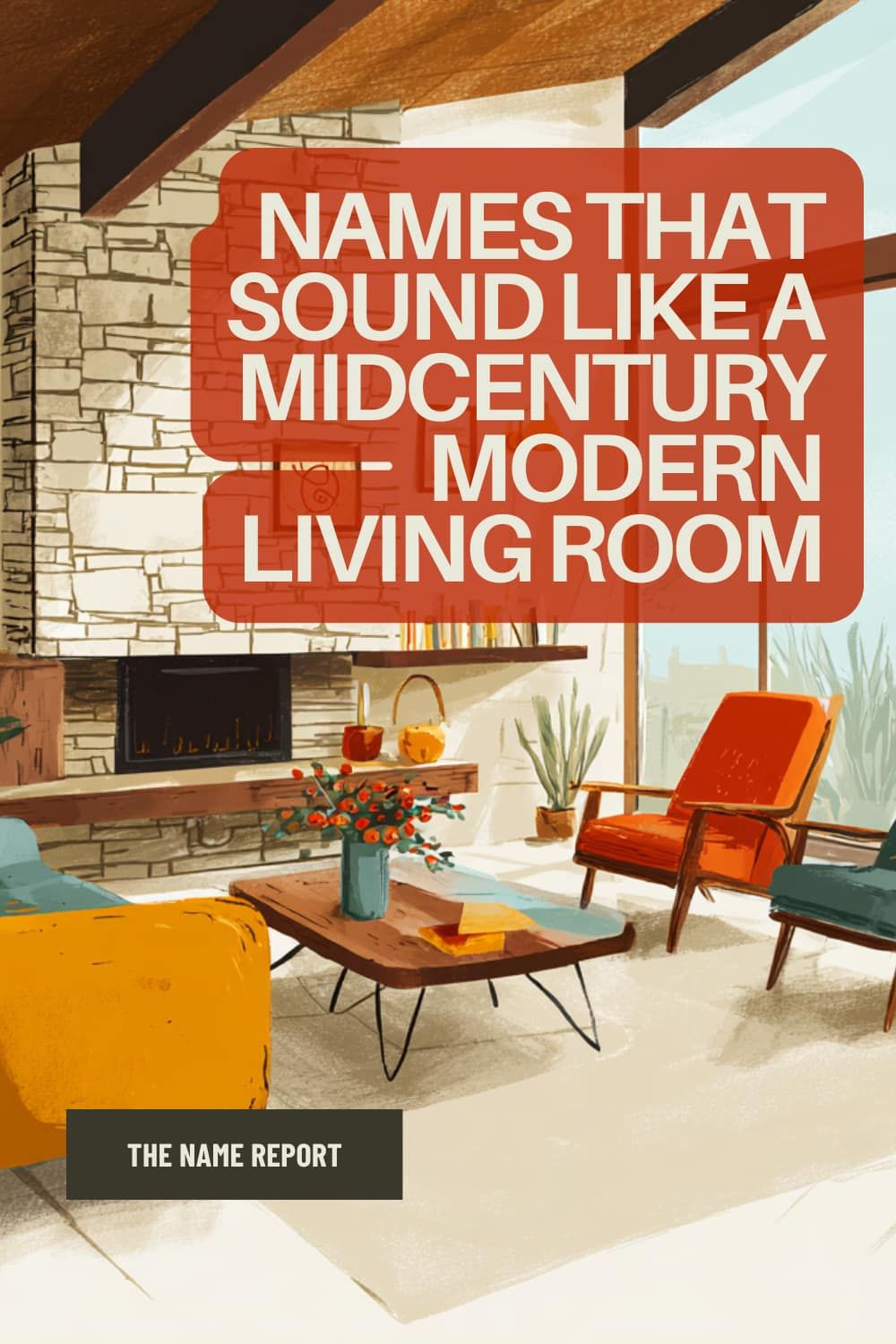
Mid-century modern (roughly 1930s-1960s, though the influence extends both directions) was about solving problems. It emerged partly from the economic reality of post-war reconstruction—you didn’t have excess materials, so you made every line count. Every curve served a purpose. Every choice was deliberate.
This created an aesthetic of clarity. Wood tones (teak, walnut, oak) rather than heavy ornament. Straight lines broken by precisely placed curves. Functionality that was so clean it read as beautiful. Honesty in materials—wood looked like wood, metal looked like metal, nothing was pretending to be something else.
Names that sound mid-century modern share those qualities. They’re honest. They’re precise. They don’t pretend. They carry weight through their structure, not through embellishment. They work because they’re efficient, and that efficiency is what makes them elegant.
The Names: Built for Clarity
Girl names with mid-century modern sensibility:
Margot (MAR-go)—The French spelling, the stopped final consonant, the clean two-syllable structure. Margot sounds like a Eames chair—functional, elegant, carrying no excess. The name works because every letter serves a purpose. Nothing is wasted. The name carries that quality of sonic sophistication that comes from precision rather than ornamentation.
Iris (EYE-ris)—Short, clean, the final R creating a stopped consonant that gives weight without length. Iris sounds modernist—a flower name that doesn’t feel precious because the name itself is so spare. The beauty comes from restraint. Names with short, clean structure carry an inherent elegance.
Vera (VAIR-uh)—”Faith,” but more importantly, a name structured with elegant simplicity. Two syllables, clear vowel sounds, straightforward consonants. Vera works like modernist typography—it’s clear, it’s legible, it’s beautiful because of its simplicity. The name has the quality of timeless design.
Greta (GRET-uh)—Short, Germanic, structured with precision. The hard T in the middle gives the name weight. Greta sounds like it belongs in a 1950s design studio—clean, efficient, carrying Scandinavian design DNA. The name works across professional contexts because of its inherent formality.
Ingrid (ING-rid)—Scandinavian origin, structured with consonant-heavy precision. The name carries weight through its phonetic structure—two strong syllables, consonants creating definition. Ingrid sounds like it’s made of teak wood and minimalist intention. The name feels both strong and refined.
Ruth (ROOTH)—”Friend,” but structurally a perfect study in modernist naming. One syllable, a clear vowel sound, a precise consonant ending. Ruth’s power comes from its absolute simplicity. The name carries weight because it’s so spare—nothing extra, nothing wasted.
Jane (JAYN)—The most basic modernist name. One syllable, maximum clarity, no ornament. Jane sounds like graph paper and clean typography. The name works because it’s so fundamentally simple that it becomes elegant. Literary weight (Jane Austen, Jane Eyre) adds substance to the structural simplicity.
Thea (THAY-uh)—”Goddess,” short Greek origin, clean two-syllable structure. The TH consonant cluster at the beginning gives weight; the straightforward vowel sounds give clarity. Thea sounds like a 1950s design—sharp, clean, purposeful. The name carries strength without heaviness.
Sybil (SIB-ul)—”Prophetess,” structured with clean simplicity. The hard S and B consonants give definition; the simple vowel structure gives clarity. Sybil sounds vintage-modernist, like something from a Hitchcock film or a design archive. The name works because of its precision.
Lea (LEE-uh)—Simple, clean, the straightforward vowel sounds giving clarity without ornamentation. Lea is the kind of name that works in every context because it’s so fundamentally spare. The simplicity creates sophistication.
Boy names with mid-century modern sensibility:
Miles (MYLZ)—Clean, precise, the stopped consonant at the end creating definition without length. Miles sounds like it belongs in a modernist design—it’s efficient, it’s elegant, it carries weight through structure. The name carries literary and sophistication weight while maintaining clean simplicity.
Martin (MAR-tin)—German origin meaning “of Mars,” structured with consonant-heavy precision. The hard consonants (M, R, T, N) create definition; the simple vowel structure creates clarity. Martin sounds vintage-modernist, like something from a 1960s corporate headquarters or a design magazine. The name is strong and functional.
Werner (WER-ner)—Germanic origin, structured with consonant density and clean repetition. The doubled R creates rhythm; the straightforward vowel sounds create clarity. Werner sounds like Bauhaus design, like precision and function married perfectly.
Kai (KY)—Hawaiian origin meaning “sea,” the most spare structure possible—one syllable, one vowel sound, two consonants. Kai works as modernist simplicity taken to its logical conclusion. The name carries strength through its spareness.
Leo (LEE-oh)—Simple, clean, two vowel sounds and one consonant. Leo works like minimalist design—it’s so fundamental that it becomes elegant. The strength comes from the simplicity. The name works across contexts because of its fundamental clarity.
Axel (AHK-sul)—Scandinavian origin, short, clean structure with consonant-heavy definition. The X and L consonants create weight; the simple vowel structure creates clarity. Axel sounds like Nordic design—precise, functional, beautiful in its spareness.
Rolf (RAWLF)—Germanic origin, structured with consonant density—R, L, F all creating definition. The name is spare but carries weight. Rolf sounds like something designed with intention, with no wasted elements.
Nils (NILZ)—Scandinavian origin, two syllables with sharp consonant definition—N, L, Z all creating precise boundaries. The name sounds Scandinavian-modernist, like it was designed in Copenhagen in 1952.
Soren (SOR-en)—Scandinavian origin meaning “stern,” structured with consonant-heavy precision. The name carries weight through its phonetic structure. Soren sounds like it belongs in a design studio, precise and elegant.
Otto (AH-toh)—Germanic origin, structured with elegant simplicity. The doubled T creates rhythm and definition; the straightforward vowel sounds create clarity. Otto sounds like it’s from a 1950s design archive—spare, functional, timeless.
The Architecture: Why These Names Sound Mid-Century Modern
Here’s what makes a name sound mid-century modern: constraint as elegance.
Mid-century modern names typically share certain phonetic characteristics:
Short to medium length. Not one syllable always, but rarely more than three. Length would add ornament. Brevity creates precision.
Clean consonant structure. Either consonant-heavy (creating definition through phonetic weight) or consonant-sparse (creating definition through clarity). Nothing is soft or blurred.
Straightforward vowel sounds. Not diphthongs or complex vowel combinations. Clear, legible vowel sounds that create transparency. The sonic texture is balanced—not smooth enough to be soft, not heavy enough to be aggressive.
Stopped or precise final consonants. Names that end in clear, definite sounds—T, K, R, N, S—rather than open vowel endings. This creates closure, precision, a sense of completion.
No ornamental suffixes. No -ia or -ella or -lyn. The structure is direct. If you name your daughter Margaret, it works; if you name her Margot (the French spelling with the stopped final consonant), it sounds more modernist. The difference is the removal of ornament.
When you combine these elements, you get names that sound designed. Intentional. Like they were chosen for a reason, not because they sounded pretty. Like every element serves a function.
The Appeal: Why Parents Choose This Aesthetic
There’s something deeply appealing about mid-century modern as a naming aesthetic. It signals certain things:
Sophistication without pretension. You’re not trying too hard. You’re not using ornate names or names with excessive meaning. You’re choosing names that work because they’re well-designed.
Intellectual clarity. Mid-century modern design speaks to a particular kind of intelligence—design thinking, structural clarity, the understanding that simplicity is harder than complexity. Names in this aesthetic signal that you think in those terms.
International accessibility. Scandinavian and Germanic names carry that mid-century modern DNA. Choosing names like Greta or Martin or Axel signals you’re comfortable with names that work across cultures without requiring translation guides. Names that work across languages carry international sophistication.
Timelessness. Mid-century modern design has lasted seventy years and counting because the principles are sound. Names chosen for mid-century modern aesthetics tend to age beautifully because they’re built on principles, not trends.
Honesty. There’s something honest about choosing names based on structure and function rather than meaning or sentiment. You’re choosing the name because it works, because it’s built right, because form and function align. That kind of intentionality signals clear values.
The Framework: Choosing a Mid-Century Modern Name
Think about structure, not meaning. What appeals to you about these names isn’t usually what they mean. It’s how they sound, how they feel, how they’re built. Lean into that. Choose based on the architecture of the name, not on hidden meanings.
Consider your last name as part of the design. Mid-century modern is about how all the elements work together. How does your first name work with your last name? Do the consonants and vowels balance? Does the overall structure read as clean and designed? Flow and compatibility matter.
Resist the urge to soften it. If you choose Martin, don’t call him Marty. If you choose Ruth, don’t add a middle name that changes the character. The power of mid-century modern names is in their spare precision. Soften them and you lose the design.
Pay attention to your own taste. If you’re consistently drawn to names like Greta, Otto, Miles—names with that particular clean, designed quality—you’re responding to a particular aesthetic. Understanding that about yourself helps you choose names that actually resonate rather than names you think you should like.
Remember: this is a chosen aesthetic. Choosing mid-century modern names signals you value design thinking, clarity, functional beauty. But you need to actually live that aesthetic, not just name for it. The values you signal with names should be values you actually embody.
The Depth: Mid-Century Modern as Philosophy
Here’s what’s deeper about mid-century modern than just aesthetic preference: it’s a philosophy about how to live. The design movement emerged from a belief that good design should be accessible, functional, honest. That you don’t need excess to be beautiful. That constraint creates elegance.
Names that sound mid-century modern carry that philosophy in their structure. They’re saying: we believe in clarity. We believe in honesty. We believe form should follow function. We believe the simplest solution is often the most elegant.
If you’re choosing names from this aesthetic, you’re not just choosing what sounds pretty. You’re choosing names that carry a particular worldview. That your child’s name signals you value precision, design thinking, functional beauty.
The question is: do you actually live that way? Do you value clarity and honesty and functional design in how you actually move through the world? Or are you choosing this aesthetic because it sounds sophisticated?
Because there’s a difference between naming for an aesthetic you love and naming for values you don’t actually embody. The names matter more when they’re true.
If you’re genuinely someone who thinks in terms of design, who values clarity and functional beauty, who believes constraint creates elegance—then names like Martin and Ruth and Margot are perfect. They’re the language of who you actually are.
If you’re naming them because they sound sophisticated, because mid-century modern is currently trendy, because you like the idea of minimalist aesthetic—that’s worth examining. The values you signal with names should be authentic.
But if you’re clear about it, if you’ve really thought about it, if these names actually align with how you see the world and how you want to raise your child—then go for it. The names are beautiful, they’re built right, and they carry a philosophy worth carrying.
Related Reading
Want to dig deeper into naming aesthetics, design thinking, and what names actually signal? Check out:
- The “Color Palette” Theory of Naming: Understanding Your Aesthetic Instincts, Name Clustering, and What Your Name Preferences Reveal
- The Sonic Luxury Paradox: Baby Names That Sound Expensive (But Cost Nothing)
- Names with Texture: Consonant Clusters and Sophisticated Sound
- Names That Actually Age Well: From Nursery to C-Suite—The Names That Never Require Reinvention
- How to Choose a Baby Name That Goes With Your Last Name: A Framework for Flow, Rhythm, and Actual Compatibility
- What Baby Names Signal About Values: Naming as Cultural Transmission, Identity Politics, and the Stories You Want Them to Carry
- Baby Names That Work in Multiple Languages: Raising Global Citizens—Names Without Borders
- Baby Names Like Leo: Strong, Simple, and Surprisingly Timeless—80+ Short, Classic Names That Carry Substance Without Trying
- Gender-Neutral Names That Work in the Boardroom: 80+ Unisex Picks That Age From Nursery to C-Suite
Your Name Report
Ready to understand what your aesthetic preferences actually reveal about you? Get your Personalized Name Report at https://app.thenamereport.com/—because naming from design principles means understanding why certain names feel right, not just which ones sound pretty.