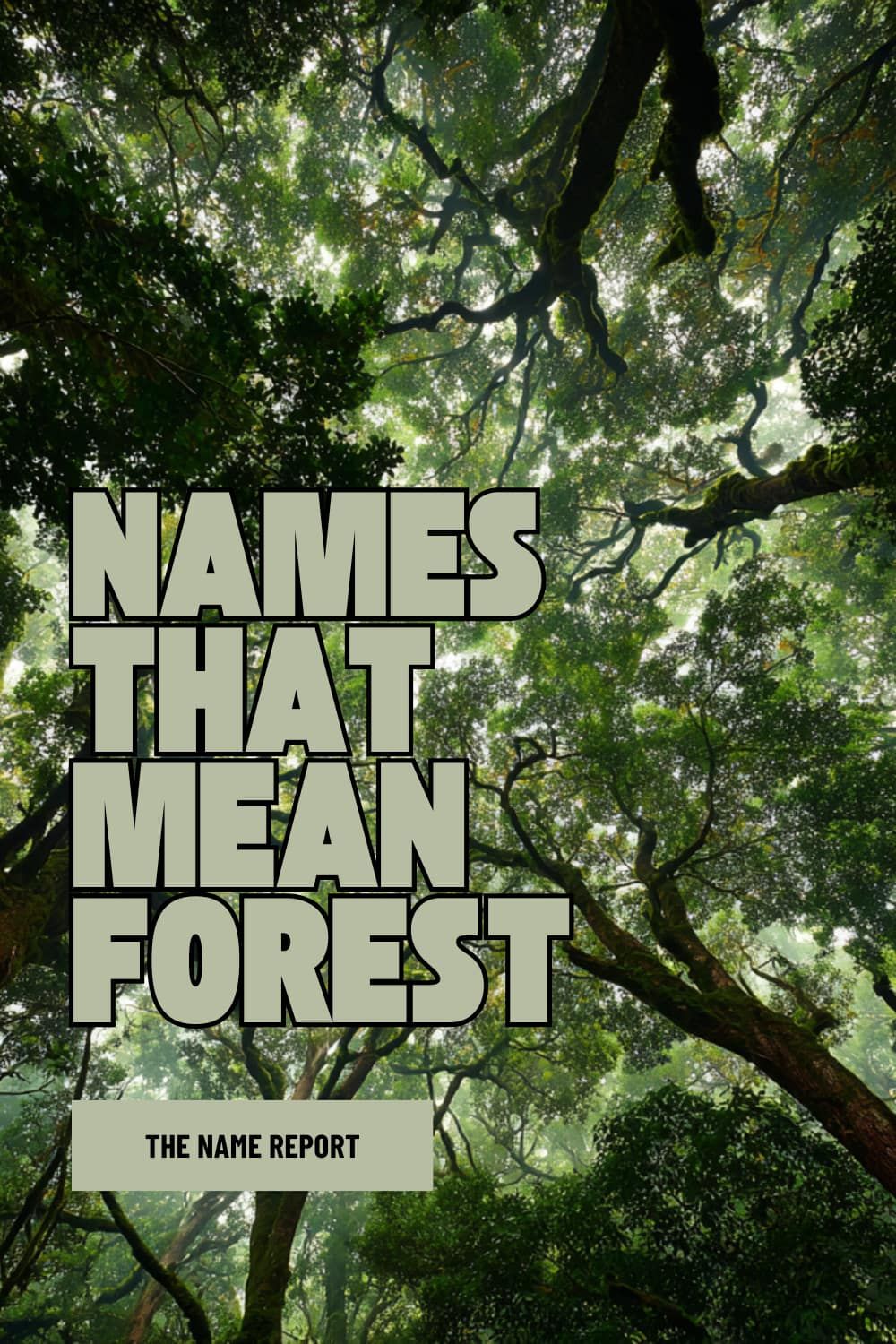
The forest isn’t just a physical place. It’s a literary category. It’s dark academia’s natural setting. It’s the backbone of cottagecore. It’s mystery, depth, solitude, and ancient knowledge all at once. So when parents choose a name meaning forest, they’re not just picking something nature-coded—they’re invoking an entire aesthetic and intellectual tradition.
Forest names carry weight. They suggest someone who reads in the woods, who understands silence, who knows that real beauty exists in what’s tangled and complex rather than simplified. They’re the dark academia names that don’t require a single name to evoke Gothic literature—the word “forest” does that work for you.
If you’re drawn to something deeper than surface nature—if you want a name that carries literary significance alongside environmental meaning—forest names offer exactly that.
The European Forest Names: Literary Tradition
Sylvia (SIL-vee-uh; Latin: silva, “forest”) — The quintessential literary forest name. There’s Sylvia Plath. There’s the Forest of Arden in Shakespeare. There’s the inherent melancholy of “sylvan”—which is somehow more atmospheric than “wooded.” It’s dark academia energy without trying. The French version, Sylvie (sil-VEE), adds softness while maintaining weight.
Forrest (FOR-ist; English: “from the forest”) — Direct, honest, no apology needed. It works because it’s specific—not “nature,” not “trees,” but the actual complexity of a forest. The single-r spelling (Forest) has become more modern, but Forrest carries the literary weight of both the character in Gump and the actual human meaning of someone who lived or worked in a royal forest.
Arden (AR-den; Celtic/English: “high, forest clearing”) — Shakespeare’s Forest of Arden in As You Like It. That alone makes this literary. But Arden works because it’s both ancient (Celtic roots) and contemporary-sounding. It’s been having a genuine moment with parents who understand dark academia aesthetics and want names with actual historical weight.
Walden (WAWL-den; Old English: “wooded valley”) — The Thoreau connection is undeniable: Walden is the foundational text for people who romanticize forests as philosophical spaces. It’s cottagecore energy but intellectual. Someone named Walden will probably have read Thoreau, which is the point.
Lyndon (LIN-dun; English: “linden tree hill”) — Less commonly used as a first name now, but it’s the kind of surname-that-works-as-first-name that signals quiet depth. Linden trees exist, yes, but the name itself feels literary. It’s specific without being precious.
Aveline (AV-uh-leen or ah-vuh-LEEN; Old French: “hazel tree”) — The magical forest name. Hazel has folkloric associations with magic, wisdom, and protection. Aveline carries all that weight plus the softness of the French diminutive. It works for parents who want something that nods to witchy aesthetics without screaming it.
Silvanus (sil-VAY-nus; Latin: “of the forest”) / Silvester (sil-VES-ter) — Roman god of forests. If you want mythological weight, Silvanus carries it. Silvester is the modernized version, still used occasionally but rare enough to feel distinctive. Both signal someone who understands classical tradition alongside nature.
Oakley (OAK-lee; English: “from the oak forest clearing”) — The modern forest name. It’s become popular in recent years precisely because it works both as a surname-first-name AND as a nature name. It’s accessible without being obvious. Surnames that work as first names often carry this kind of double coding, and Oakley is doing it well.
The Asian Forest Names: Depth and Poetry
Lin (LEEN; Chinese: 林, “forest”) — One character, one meaning, infinite weight. Lin works in multiple languages and contexts. It’s modern while carrying ancient meaning. The gender-neutrality is built in. In Chinese, a double name (Linlin or similar) intensifies the meaning—doubling the character means “abundance of forest,” which has poetic resonance. It’s simple in a way that requires confidence.
Mori (MOR-ee; Japanese: 森, “forest”) — Single character, genuine meaning. Mori has that clean Japanese aesthetic—it’s not trying to be anything other than what it is. There’s a filmmaker named Moira who might appreciate the phonetic similarity, but Mori stands entirely on its own. The straightforward meaning gives it literary weight.
Shilin (shuh-LEEN; Chinese: “deep forest”) — More poetic than Lin. This one specifically means “deep” forest, which carries the sense of mystery and complexity that makes forests literary rather than just botanical. It’s the forest as metaphor for depth—literal and intellectual.
Hayashi (hah-yah-shee; Japanese: 林, “forest,” also meaning “growth, cultivation”) — The Japanese surname that’s become a given name. Hayashi suggests something growing, not static. There’s movement in it. The founder of the Hayashi clan of Confucian scholars carried this name, so there’s intellectual weight built in.
Lâm (lahm; Vietnamese: “forest”) — Less familiar in Western contexts, which is part of its power. It’s straightforward, it’s beautiful, and it carries the environmental consciousness of parents who want something genuinely meaningful rather than performatively trendy.
Hanaelion (hah-nah-AY-lee-on; Japanese: “hana” = flower + “rin” = forest) — For parents who want the forest name but with botanical specificity. This is a full landscape—flowers in the forest, light through the canopy. It’s poetic, it’s visual, and it works for any gender.
The Global Forest Names: Diverse Traditions
Vipin (VIP-in; Sanskrit: “forest,” used in Hindi, Marathi, Malayalam) — Sanskrit roots give this spiritual weight. Vipin appears in Hindu texts and mythology as a celestial forest or sacred grove. It’s environmental and spiritual simultaneously. Parents drawn to meaningful names with genuine cultural significance often choose Sanskrit-rooted names like this.
Vanya (VAHN-yuh; Hindu: “deity of the forests”) — Not often used in English-speaking contexts, which makes it feel genuinely distinctive. But the meaning is explicit: this is a forest deity. It carries mythology. There’s power in naming your child after a being whose purpose is the forest itself.
Jazlin (JAZ-lin; Arabic: “the forest of olive trees”) — Specific and poetic. Not just forest, but a particular kind of forest with a particular tree. Olive trees have their own literary and spiritual significance (peace, wisdom, endurance). The Arabic roots ground this in tradition while the sound feels contemporary.
Msitu (em-SEE-too; Swahili: “forest”) — Direct, powerful, specific to African naming traditions. Swahili names meaning forest and nature carry different weight than European translations—there’s a connection to actual forests, actual land, actual survival. It’s not metaphorical; it’s material.
Oihan (oy-HAN; Basque: “forest”) — Simple, distinctive, carrying Basque linguistic tradition. Basque names have their own aesthetic power—they sound different, which makes them feel both grounded and literary. Oihan specifically suggests someone who understands that names can be single words of power.
Orman (or-MAHN; Turkish: “forest”) — Less common than European options, which gives it genuine distinctiveness. Turkish names often carry directness—they say what they mean without ornament. Orman is a forest that requires no translation, no metaphor, just itself.
Nahele (nah-HAY-lay; Hawaiian: “forest”) — Hawaiian forest names carry specificity about actual place. Nahele refers to the native forests of Hawaii, which have their own ecosystem, their own cultural significance, their own literary resonance if you’re reading Hawaiian literature. It’s environmental naming with real geographic meaning.
Jangal (JUN-gul; Hindi: “forest”) — Hindi forest name, different from Sanskrit but carrying similar weight. The meaning is direct—wilderness, untamed beauty. There’s honesty in it. Not cottagecore forest (aesthetic and literary), but actual forest (material and real).
How Forest Names Work Across Aesthetics
For Dark Academia Readers: Forest names work because dark academia’s foundational text is literally set in and around forests and ancient places. Dark academia isn’t about cheerfulness; it’s about complexity, mystery, intellectual depth. A forest name carries all of that implicitly. Sylvia, Arden, Walden—these aren’t coincidental choices for dark academia parents.
For Cottagecore Dreamers: Cottagecore is about living in communion with nature, but it’s a specific kind of nature—intentional, beautiful, cultivated-but-wild. Forest names work here too because cottagecore forests are literary (think Hansel and Gretel, Little Red Riding Hood, the Hundred Acre Wood). They’re not wilderness; they’re enchantment. Aveline, Oakley, Walden all work for cottagecore because they suggest forests as magical spaces.
For Genuinely Environmental Parents: Some parents choosing forest names are doing it because they actually care about environmental consciousness and want to raise their child with that value. Names like Msitu, Vipin, Jangal carry that seriousness. These aren’t metaphorical forests; they’re real places and real ecosystems. The naming is about commitment.
For Literary Parents Generally: Forest names work because literature—from Shakespeare to Thoreau to contemporary fantasy (The Hobbit, A Court of Thorns and Roses)—uses forests as central metaphors for depth, mystery, self-discovery, and transformation. Naming your child with a forest name signals that you understand forests as literary category.
The Names to Know: Quick Reference
For Girls: Sylvia, Arden, Aveline, Sylvie, Olivia (ancient “forest” coding), Hazel (hazel tree), Lin, Hanaelion, Jazlin, Nahele
For Boys: Forrest, Walden, Silvester, Oakley, Mori, Hayashi, Vipin, Orman, Nahele
Unisex/Flexible: Avery (though increasingly feminine-leaning), Lâm, Msitu, Oihan, Jangal, Arden (becoming more unisex), Forest, Woods
The Consideration: Literary Expectation
Here’s what’s important: if you name your child something meaning forest, people will expect a certain kind of depth. Not in a pressuring way, but culturally. They’ll assume literary knowledge. They’ll imagine someone who reads, who thinks, who has genuine substance beneath the surface.
This isn’t a problem if that’s actually your value system. But it’s worth being honest about. If you’re choosing a forest name because it sounds pretty, that’s fine—but understand what you’re invoking. You’re invoking dark academia, literary tradition, environmental consciousness, magical thinking. The name carries those associations.
That said, people also grow into their names. A child named Walden might genuinely become someone who reads Thoreau and finds meaning in forests. Names shape narratives. Forest names specifically shape narratives about depth, complexity, and the beauty in what’s wild and untamed.
If you’re trying to understand whether a forest name aligns with your actual values—whether it’s genuinely meaningful or performatively aesthetic—the Personalized Name Report can help you think through what your naming choices actually reveal.
Ready to find your forest?
Get a Personalized Name Report that helps you understand what draws you to certain names—whether it’s the literary tradition, the environmental consciousness, the aesthetic, or all of it combined. Discover names that genuinely align with your values, not just your image. Find Your Perfect Name