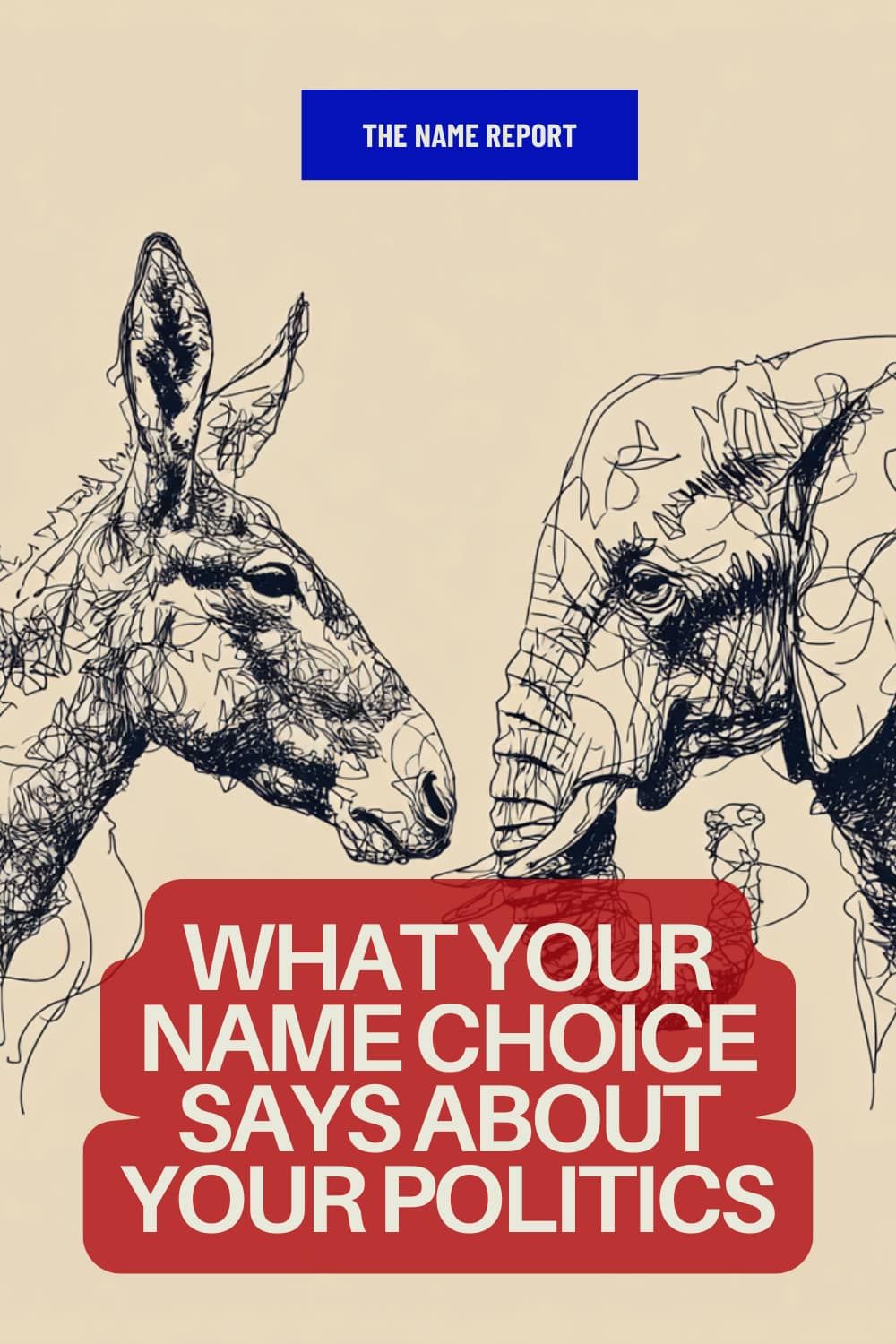
You want to believe that naming your child is a deeply personal, individual choice. A reflection of your taste, your values, your vision for who they’ll become. And technically, it is. But here’s what the research actually shows: your name choice also reveals your political ideology, your relationship to class aspiration and maintenance, your assumptions about race, and the subtle ways you’re positioning your child within systems of inequality that operate largely invisibly.
This isn’t a judgment. It’s sociology. And it matters more than you think.
What we’re talking about here goes beyond what names that feel like old money reveal or the class politics already visible in naming choices. This is about understanding the deeper systems operating beneath those surface observations.
The Research Is Unambiguous
In 2004, political scientist Eric Oliver at the University of Chicago did something unusual: he got access to birth records from 545,018 babies born in California that year and matched them against neighborhood voting patterns. The research was published in Live Science and has since become the foundational study on naming and political ideology.
What he found was startling in its specificity.
Liberal parents in well-educated households were twice as likely to give their children uncommon names compared to conservative parents in well-educated households. But that’s not the whole story. The kinds of uncommon names differed dramatically by ideology.
Liberal parents chose culturally obscure, internationally-influenced names: Archimedes. Finnegan. Esme. Names that signal educational capital and cultural sophistication. Conservative, well-educated parents? They chose uncommon names too, but from a different playbook: invented spellings (Baylee instead of Bailey), surnames-as-first-names (Braxton, Colton), place names (Brooklyn, Dakota). Names that signal American rootedness and a different kind of status—not intellectual but entrepreneurial.
What’s remarkable is that both groups were doing the same thing: using names to signal status. Neither group seemed fully aware they were doing it. This is the core insight of the research—and it connects directly to how the color palette theory of naming explains why our name preferences cluster around certain aesthetic and ideological patterns.
The Sound of Your Politics
Here’s where it gets genuinely eerie. The phonetics of names correlate with political ideology so consistently that researchers can predict voting patterns from name selection alone.
Parents in liberal neighborhoods are more likely to choose softer, more feminine sounds—particularly the letter “L”—for their babies’ names, while conservative parents gravitate toward harder consonants like K, B, and D.
Liberal girl names: Liam (wait—that’s technically a boy name, but the “L” pattern holds), Lily, Elise, Alexandra, Madelyn. Soft vowel endings, liquid consonants, open sounds. Over 90% of the most liberal girl names ended in a vowel.
Conservative girl names: Kylie, Catherine, Kate. Staccato sounds, hard stops, strong consonants. Conservative girl names disproportionately end in N—a sharp, decisive ending.
For boys, the pattern is just as clear. Liberals choose Liam, Ely, Theodore, Edward. Conservatives choose Kurt, Brandt, Colton, Maverick.
The research even extends to presidential families. The liberal Obamas named their daughters Sasha and Malia—both names heavy on A’s and L’s. The conservative Palin family chose more masculine-sounding names across the board: Track, Trig, Bristol, Piper.
But here’s the thing: neither group is consciously thinking about phonetics. Parents aren’t sitting around saying “I want a name with more liquid consonants to signal my leftist values.” Yet the correlation is so strong that it reveals something deeper about how ideology shapes taste, and how taste becomes a tool for distinguishing yourself from people who don’t share your values.
Class Signaling Disguised as Personal Choice
The most uncomfortable truth embedded in naming research is this: names simultaneously signal race, class, and ideology in ways that compound existing inequalities.
Sociologist Stanley Lieberson found that when parents from marginalized communities choose names, they often do so with explicit awareness of discrimination. Some Black American parents reported selecting names specifically so “people couldn’t tell I was Black until they saw me in person.” This is the lived experience of naming under systemic racism: your child’s name becomes a resume screen before they’re old enough to have a resume.
But the discrimination gets more insidious when you layer in class. Research by S. Michael Gaddis reveals that names more commonly given by highly educated Black mothers (like Jalen and Nia) are less likely to be perceived as Black than names given by less educated Black mothers (like DaShawn and Tanisha). This isn’t coincidence. It’s educated Black parents engaging in strategic name selection as class protection.
Meanwhile, unique names chosen by lower-income parents—whether spelled unconventionally (Lezlee instead of Leslie, Andruw instead of Andrew) or invented entirely—get read differently than unique names chosen by educated, affluent parents. The name “Hunter” is just as unusual as “Malik,” but it’s understood as “normal” because of its association with white men. Same level of uncommonness. Completely different social reception. This dynamic is part of the hidden class politics of baby naming that most parents never consciously examine.
The research is clear: people tend to like others more and form more positive first impressions of people with easier-to-pronounce names. People with easier-to-pronounce names also tend to be higher on the corporate ladder. In one study, lawyers with more easily pronounceable names occupied superior positions within their firm hierarchy—regardless of nationality, name length, or how common the name was.
The Gender Component (and How It Reveals Gender Politics)
Names don’t just signal ideology and class. They signal assumptions about gender—and different ideologies have different assumptions.
Girls with more gender-neutral names are more likely to complete higher levels of math and science courses. Even when comparing twins, a twin sister named Alex is twice as likely as her twin sister named Isabella to take math at higher levels. Researchers speculate this is due to expectations: teachers and parents are more likely to expect an Alex to excel at math than an Isabella due to stereotypes about girls and math performance.
But here’s the pattern: conservative parents tend to give both boys and girls more traditionally gendered names. Liberal parents are more likely to choose names that blur gender categories or lean soft-sounding (which research associates with femininity) across genders. This creates an interesting paradox: liberal parents are more likely to give boys “feminine-sounding” names (Liam, Adrian, Theodore) as a way of pushing back against restrictive masculinity. Conservative parents, even when choosing unique names, often gender them very clearly.
But here’s where it gets complicated: boys with gender-neutral names tend to show more behavioral problems in school and score lower on academic tests, particularly as they get older and enter middle school. This suggests that while a gender-neutral name may support girls’ academic confidence in STEM, the same naming strategy for boys correlates with worse outcomes—likely because society penalizes masculine deviation differently than feminine deviation. The mechanism isn’t entirely clear from the research, but the correlation is stark. This is the paradox of trying to reshape gender identity through naming: what signals possibility for girls may signal confusion or weakness for boys in the eyes of peers and teachers.
The Racial Component (Which Nobody Wants to Admit)
Here’s what makes the politics of naming most fraught: names function as racial signals whether we intend them to or not.
The landmark research here is Devah Pager’s audit study on employment discrimination. Pager found that job applicants with “Black” names and no criminal record were far less likely to get calls for interviews than applicants with “white” names who had a criminal record. Your name, in other words, can be a more significant barrier to employment than an actual criminal conviction.
But the “race signal” embedded in names is more complicated than researchers initially understood. It doesn’t just signal race—it signals class and education level within racial groups. Research by S. Michael Gaddis shows that Americans tend to assume that individuals with names typically used by Black and Hispanic people have lower educational attainment. These assumptions compound the hiring discrimination problem.
This connects directly to names with rich histories in the Americas and Black culture—and the difference between naming choices made with awareness of discrimination versus those made without that context. When Black parents strategically choose names, they’re operating from lived experience. That’s fundamentally different from educated white parents choosing diverse-sounding names to signal cosmopolitanism.
What’s particularly fraught is that the Bluest baby names for boys include Moshe, Muhammad, and Yusuf—names with strong Jewish and Islamic associations. The Reddest names lean toward Americana imagery and military/gun associations. This isn’t accident. It’s a reveal of something deeper: liberal parents (particularly educated, wealthy liberal parents) signal multicultural openness and diversity-awareness through their naming choices. Conservative parents signal American rootedness and, in some cases, anti-establishment frontier mythology.
But here’s the thing nobody says out loud: using Islamic or Hebrew names because they signal “educated liberal parent” is its own form of appropriation. You’re adopting the cultural capital of other traditions to position yourself as cosmopolitan, while those same names carry genuine consequences for actual Muslim and Jewish children in employment, housing, and education.
The Class Divide That Matters Most
The research shows that naming differences based on political ideology are strongest among college-educated parents. Among college-educated whites, politics made a dramatic difference. College-educated liberal parents were twice as likely as college-educated conservative parents to give their children uncommon names.
But less-educated parents, regardless of political ideology, were more likely to invent names or choose uncommon spellings for popular names. This is the crucial insight: unusual names are not automatically a marker of liberal ideology. They’re a marker of class aspiration and, often, lower socioeconomic status.
The difference matters because society interprets the same phenomenon differently depending on the racial and class context. The link between unusual names and political ideology is strongest among wealthy, well-educated white parents. For other groups, unusual names get read through the lens of cultural difference or (more harshly) as trying too hard—rather than as cultural sophistication.
How Names Become Self-Fulfilling Prophecies
Here’s where naming gets dangerous: it’s not just that your name reveals your parents’ politics. Your name actively shapes how people treat you, which shapes who you become.
Children with names spelled in unusual ways or with punctuation (like Da’Quan) tend to score lower on math and science tests than other children. This may be related to teachers’ expectations or associations of the name with a particular race or socioeconomic class. While teachers likely aren’t consciously discriminating, research suggests that unconscious expectations shaped by what a name signals can influence classroom behavior and student outcomes—though the exact mechanisms are complex and not fully established.
Similarly, girls with more masculine names are more likely to be successful in traditionally male-dominated careers. One study found that females with more masculine names were more likely to achieve leadership positions such as judgeships. The “Portia Effect,” as researchers call it, suggests that a name shapes not just how others perceive you, but how you perceive yourself.
You name your daughter Riley instead of Rose because you want her to have options, to not be limited by femininity. And the research suggests your instinct may not be entirely wrong—she may be more likely to pursue mathematics, law, and leadership because research shows that people form different expectations for someone named Riley than someone named Rose. But we can’t be certain whether the name itself influences her self-concept, whether others’ expectations change how they treat her, or both.
The Tradition Paradox
Here’s the weird part: liberals are typically considered the anti-establishment political faction. Yet liberals tend to prefer fuller forms of names—Madeline over Maddie, Benjamin over Ben, Nicholas over Nick—honoring traditional, formal naming conventions. Conservatives are more likely to use the nickname form as the official name: Maggie, Gracie, Colt instead of Margaret, Grace, Colton.
And when it comes to cultural origins, the diversity of the liberal voting bloc is reflected in baby names: Italian names like Emilia and Gianna, Irish names like Quinn and Aidan, Latino names like Benjamin and Valentina, and names popular in Jewish communities like Nina and Eliana. Conservative parents, meanwhile, favor place names: Londyn, Brooklyn, Dallas.
This inverts the political stereotypes completely. Liberals are supposed to be progressive, yet they’re choosing classical, formal, historically-rooted names. Conservatives are supposed to be tradition-focused, yet they’re inventing new spellings and choosing contemporary place-based names.
What’s actually happening is that both groups are claiming different kinds of authority. Liberals claim cultural authority through connection to international, educated traditions. Conservatives claim American authority through connection to land, geography, and frontier mythology. Both are signaling status; they’re just signaling different kinds of status to different audiences.
The irony is that this pattern reveals how naming is never neutral—it’s always performing something, always claiming something about who you are and what you value.
What This Means for You (If You’re Naming a Child)
The research doesn’t tell you what name to choose. But it does tell you some things worth knowing:
First: you’re always signaling something. Even if you choose a name thinking you’re making a neutral, personal choice, that choice communicates ideology, class position, and assumptions about race and gender to everyone who reads it. That’s not a reason to not choose the name you love. It’s just a reason to be aware of what you’re communicating. This is where understanding how to choose a baby name that works with your last name becomes about more than just phonetic compatibility—it’s about what the whole combination signals.
Second: there’s a difference between being aware and being paralyzed. You can acknowledge that unusual names carry class and racial signaling without deciding that makes them wrong. You can choose a name that reflects your values—including your values around gender, culture, and tradition—while understanding that society will interpret it through frameworks of inequality you didn’t create.
Third: be honest about your motivations. Are you choosing an uncommon name because you genuinely love it, or because you want to signal cultural capital? Are you choosing a name that honors your heritage, or appropriating someone else’s? Are you trying to protect your child from discrimination, or position them for advantage? These questions matter. Your answer doesn’t determine whether the choice is right—but it determines how aware you are of what you’re actually doing.
Fourth: understand that names work differently for different people. When Black parents choose names, they’re often making strategic decisions shaped by lived experience of racial discrimination. When educated white parents choose unusual names, they’re usually making aesthetic decisions shaped by cultural capital. The choice looks the same on a birth certificate. The social consequences are radically different. This is also why names that actually age well have different meanings depending on whose name it is and what systems they’re navigating.
The Hidden Architecture
Here’s what naming research ultimately reveals: the choices that feel most personal—what you call your child—are actually expressions of the deepest structural inequalities in society. Your naming choice puts your child into a system where names function as resume screens, stereotype triggers, gender signals, and class markers.
You can’t opt out of that system. But you can understand how it works. You can make choices with your eyes open. You can choose names you love while being aware that “love” is never purely personal—it’s shaped by your education, your income, your race, your politics, and your vision of what kind of status you want your child to claim in the world.
That awareness doesn’t make the choice easier. But it makes the choice honest.
Ready to understand what your own naming instincts reveal about your values—and which names align with your authentic vision rather than unconscious signaling? Get Your Personalized Name Report and explore the deeper patterns in what draws you to certain names. Because the right name isn’t one that performs ideology. It’s one that reflects who you actually are.