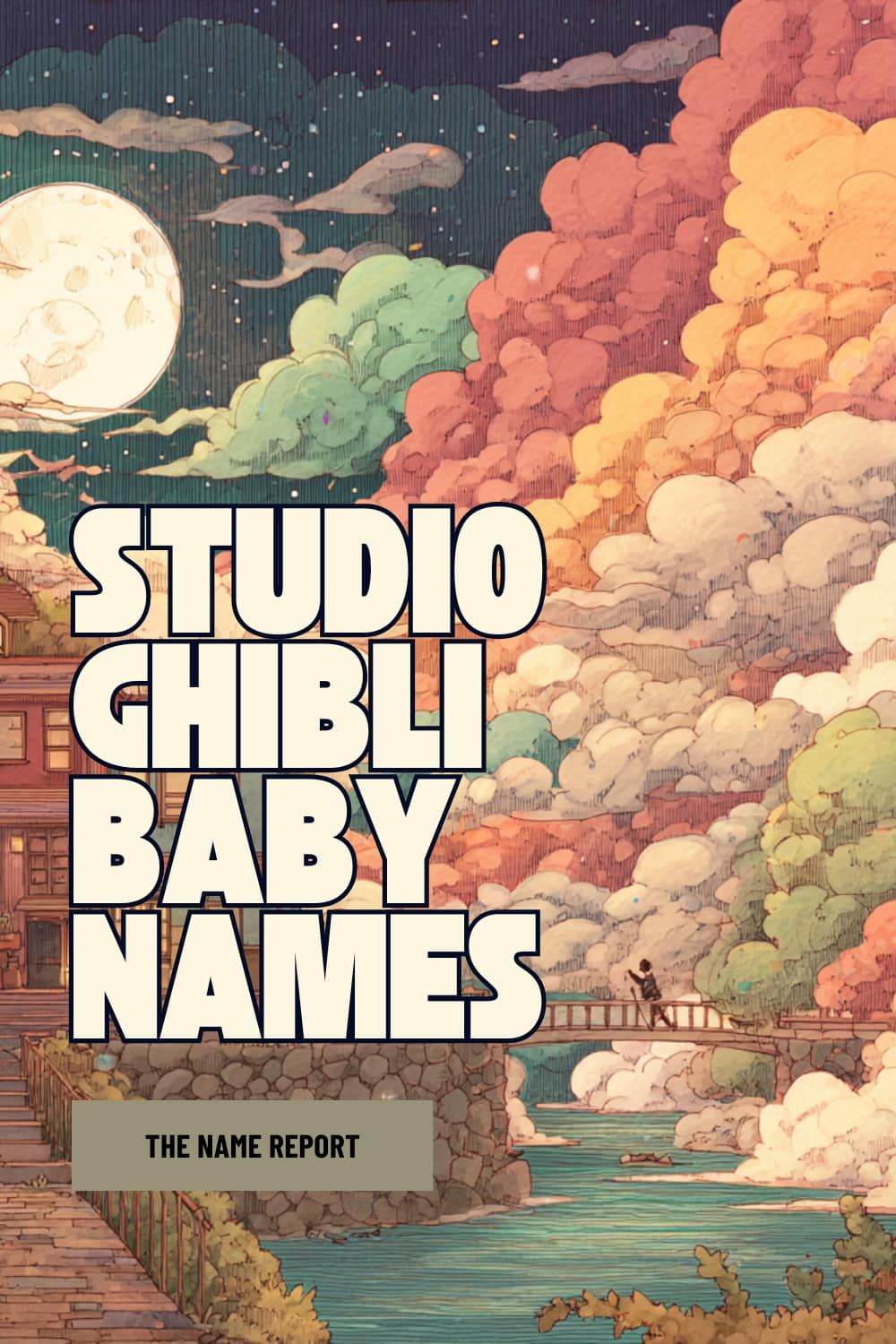
There’s a particular quality to Studio Ghibli films that defies easy categorization. It’s not quite magical realism. It’s not quite fantasy. It’s something more specific: a world where the mundane and the magical coexist so seamlessly that you stop noticing the seams. Where a girl can ride on the back of a spirit and it feels like the most natural thing in the world. Where soot sprites exist alongside ordinary households. Where beauty exists in deterioration, in nature reclaiming things, in the spaces between.
And the names in those worlds carry that same quality. They’re beautiful without being precious. They’re whimsical without being childish. They exist in a space between the real and the imaginary, between the concrete and the dreamlike.
There are names that sound like they belong in Miyazaki’s worlds. Names that carry that particular aesthetic—the combination of Japanese sensibility, natural imagery, linguistic musicality, and a kind of quiet magic. Names that feel like they were drawn by hand rather than assembled from a list.
These are names for parents who understand that whimsy isn’t the opposite of depth. That a child can have a name that sounds like a story and still be taken seriously. That there’s a way to be both magical and grounded, both playful and substantive.
The Aesthetic: What Ghibli Actually Sounds Like
First, understand what we’re actually talking about when we say “Ghibli aesthetic.” It’s not just Japanese names, though many of them are. It’s a specific approach to the world that values:
The beauty of impermanence. Ghibli films embrace decay, change, the way nature reclaims things. Names in this aesthetic often carry imagery of things that fade, transform, or exist temporarily. Leaves, water, light. Things that are beautiful because they don’t last.
The magic of the everyday. The Ghibli aesthetic finds enchantment in ordinary moments. A meal. A walk through a garden. The way light falls through a window. Names in this aesthetic tend to be accessible while still carrying a sense of wonder. They’re not grandiose. They’re intimate.
Nature as living presence. In Ghibli films, the natural world is a character. Forests have consciousness. Water has agency. Wind carries meaning. Names in this aesthetic are often nature-based—but in a sophisticated way, not saccharine.
Linguistic musicality. Japanese as a language is deeply musical. Ghibli names often carry that musicality into English. Soft consonants, open vowels, a quality of flowing from one sound to the next. The names don’t feel harsh or clunky. They flow.
Melancholy without darkness. There’s a particular Japanese aesthetic called mono no aware—the pathos of things. A sadness that’s beautiful. A sense that everything is temporary and that temporariness makes things precious. Ghibli names often carry this—they’re not dark, but they carry a gentle weight.
The texture of these names is different from Western naming traditions. They exist in a different phonetic space. They sound like something else. Something other. Something beautiful precisely because it’s unfamiliar.
The Names: From Japanese to Ghibli-Inspired
Japanese names with genuine Ghibli DNA:
Naoko (nah-OH-ko)—”Honest child.” The name carries linguistic musicality—the soft consonants, the open vowels, the quality of flowing from one sound to the next. It appears in Ghibli contexts without being precious. It’s grounded and real while carrying the Ghibli aesthetic.
Yuki (YOO-kee)—”Snow” or “courage.” Short, clean, carries natural imagery (snow) without being saccharine. The name has the kind of spare beauty that characterizes Ghibli—simple, precise, deeply evocative. The brevity creates sophistication.
Hana (HAH-nuh)—”Flower.” The most straightforward botanical name, but it carries the Ghibli aesthetic because Japanese plants are specifically rendered in Ghibli films. Not as generic flowers, but as specific, particular, beautiful things. Hana is that particularness.
Akira (ah-KEER-uh)—”Clear, bright.” The name carries light imagery without being obvious about it. It’s used for all genders in Japanese contexts, which aligns with the gender flexibility of Ghibli. The sound is clean and precise.
Chihiro (chee-HEER-oh)—”Thousand-fold” or “abundant.” The most Ghibli name on the list—it’s the protagonist of Spirited Away. The name carries that particular quality of Japanese names: it means something specific, it sounds beautiful, and it carries the sense of abundance and multiplicity that characterizes the film.
Katsuro (kah-tsoo-ROH)—”Victory.” Masculine-coded in Japanese, but the sound is so musical that it transcends gender coding. The name carries the Ghibli aesthetic through its musicality and its meaning (victory, but in a gentle sense rather than aggressive).
Tomoe (toh-MO-ay)—”Blessing.” The name is feminine in Japanese but carries the kind of quiet strength that characterizes Ghibli’s best characters. It has musicality, it has meaning, it has the quality of something drawn by hand.
Sakura (sah-KOO-rah)—”Cherry blossom.” The quintessential Ghibli imagery—cherry blossoms carrying mono no aware, beauty and sadness and temporariness all at once. The name carries that aesthetic without being cliché.
Kaida (KY-duh)—”Little dragon.” The name carries mythological substance while remaining accessible. It has the kind of gentle strength that characterizes Ghibli characters.
Hikari (hee-KAH-ree)—”Light, radiance.” The name carries luminosity without being obvious. It’s specific—not just light, but a particular quality of light. That specificity is very Ghibli.
Western names with Ghibli aesthetic:
The thing is: you don’t have to use Japanese names to access the Ghibli aesthetic. There are Western names that carry that same quality—the musicality, the natural imagery, the gentle magic. These are names that sound like they belong in Ghibli worlds even though they’re not Japanese.
Elowen (EL-oh-wen)—Cornish origin meaning “elm tree.” The name carries botanical imagery while sounding otherworldly. It has that quality of something made up but that feels true, which is very Ghibli. The natural imagery is specific without being precious.
Rowan (RO-un)—”Tree with red berries.” We’ve mentioned this before, but it’s worth emphasizing: Rowan carries the Ghibli aesthetic perfectly.I t’s nature-based but not saccharine. It has strength and simplicity. It sounds like something from a hand-drawn world.
Iris (EYE-ris)—The flower, but also the Greek goddess, but also light (the iris of an eye). The name carries multiple layers of meaning while sounding crisp and clear. It’s sophisticated without being heavy.
Aspen (AS-pun)—The tree. The name has a kind of rustling quality—the way aspen leaves sound in wind. It carries imagery of movement, of natural sound, without being obvious about it.
Miren (meer-EN)—Irish origin meaning “admirer” or “bright sea.” The name carries water imagery and linguistic musicality. It sounds like something from a story without being precious.
Linden (LIN-dun)—The linden tree. The name has that particular Ghibli quality of being specific without being obvious. You might not know what a linden tree is, but the name feels right anyway.
Cillian (KIL-ee-un)—Irish, and while not specifically botanical, the name carries the kind of linguistic musicality that characterizes Ghibli aesthetic. It sounds like something from another world.
Hazel (HAY-zul)—The tree, the color, the quality of light. The name carries natural imagery without being saccharine. It’s accessible while remaining poetic.
Lark (LARK)—The bird. Short, precise, carries imagery of flight and song. It has that quality of something drawn with just a few lines.
For boys specifically:
Kai (KY)—Hawaiian origin meaning “sea.” We’ve mentioned this before, but its simplicity, its water imagery, its quality of sounding like it’s from another world—all very Ghibli. The name works across gender contexts.
Orion (oh-RY-un)—The constellation, the hunter. The name carries mythological substance while sounding accessible. It’s specific without being obvious.
Luca (LOO-kuh)—”From Lucania,” but more importantly, it’s the name of the Pixar film character who’s a sea creature. The name carries lightness and water imagery. It has a quality of flowing rather than being blocked.
Ezra (EZ-ruh)—”Help,” but it sounds like something from a story. The name is literary without being precious. It has accessibility and mystery simultaneously.
Silas (SY-lus)—”From the forest.” The name carries natural imagery while sounding precise and clean. It’s strong without being aggressive.
Soren (SOR-en)—”Stern,” Scandinavian origin. The name carries design-thinking precision while sounding musical. It’s specific and clear.
The Mechanics: Why These Names Sound “Ghibli”
Here’s what makes a name sound like it belongs in a Ghibli film:
Softness without weakness. The names don’t have harsh consonants. The consonants exist to shape the vowels, not to create barriers. But they’re not weak. They’re precise. They exist with intention.
Specificity in imagery. If a name references nature, it references specific things, not generic categories. Not “flower” but “cherry blossom.” Not “bird” but “lark.” That specificity carries magic.
Linguistic foreignness without being unpronounceable. These names work across languages because they follow phonetic rules that English speakers can parse, but they sound like they’re from somewhere else. That otherness is part of the aesthetic.
Connection to something larger. Ghibli names often carry meaning that connects to mythology, nature, or philosophy. They’re not arbitrary. They’re names that signal values—specifically, values about beauty, nature, and the interplay between the mundane and magical.
A quality of drawing. This is harder to articulate, but there’s a sense in which these names sound like they were drawn rather than assembled. As if someone sat down with a specific image in mind and created a sound to match it.
The Reality Check: Can You Actually Live This Aesthetic?
Here’s the thing: naming your child with the Ghibli aesthetic signals something. It signals you value beauty, nature, whimsy, magic. It signals you see the world as containing wonder. That you believe in gentleness and strength coexisting.
But the aesthetic you choose to signal with a name should be an aesthetic you actually live.
So before you name your daughter Sakura or your son Kai, ask yourself: am I actually that person? Do I actually move through the world seeing magic in ordinary things? Do I value nature and natural imagery? Do I create space for whimsy and beauty in daily life? Or am I naming for an aesthetic I wish I embodied?
Because there’s a difference between naming your child for who you want to be and naming your child for who you actually are. And if you name them for who you want to be but don’t model that, the name becomes a kind of lie.
That said: there’s also something powerful about naming your child for a possibility. About saying: I want our life together to contain wonder. I want to raise you with an appreciation for beauty and nature and the magic in ordinary things. That’s not dishonest. That’s aspirational. And aspiration, if you’re actually pursuing it, is authentic.
The question is: which one are you doing? And are you honest about it?
The Framework: Choosing a Ghibli-Aesthetic Name
Understand what draws you. Is it the Japanese origin? The natural imagery? The musicality? The sense of otherness? Understanding what specifically appeals to you helps you identify other names that carry the same qualities.
Consider your own aesthetic. Do you actually live with natural imagery around you? Do you actually value that kind of beauty? Understanding your own color palette helps you choose names that feel authentic rather than aspirational.
Think about how the name works with your last name. Ghibli-aesthetic names often have a certain musicality. How does that work with your actual last name? Does the combination flow, or does it feel disjointed? Flow matters.
Consider the full context. If you’re not comfortable with or connected to Japanese culture, using a Japanese name requires honesty about why. Cross-cultural naming ethics matter. You’re not appropriating (Ghibli films are globally beloved), but you should understand what you’re doing and why.
Pay attention to your instinct. If a name feels right, if it carries that quality of being drawn by hand rather than assembled, if it feels like it comes from somewhere authentic in you—trust that. Your naming instincts are revealing something.
The Depth: What This Aesthetic Actually Means
Choosing a Ghibli-aesthetic name is about more than aesthetics. It’s about a particular philosophy of how to live in the world.
The Ghibli aesthetic values:
- Wonder without naïveté. The world is complex and sometimes dark. And it’s also beautiful and magical. Both things are true.
- Nature as alive. The natural world isn’t decoration. It’s a presence. It has agency. It matters.
- Gentleness as strength. In Ghibli films, the strongest characters are often the gentlest. Kindness is power.
- Beauty in decay. Things don’t have to be new or perfect to be beautiful. Impermanence makes things precious.
- Specificity over generality. Details matter. The particular cherry blossom matters more than “flowers” in general.
If you’re choosing a Ghibli-aesthetic name, you’re saying you want your child to move through the world with those values. You’re saying: I want you to see beauty where others see only utility. I want you to recognize that kindness is strength. I want you to understand that magic exists in ordinary moments.
That’s beautiful. And if you actually believe it and model it, then naming your child with that aesthetic makes sense.
If you’re just choosing because the names sound pretty, that’s legitimate too—but be honest about it. Names don’t have to carry profound meaning to be right. Sometimes a name is right because it feels right. And that’s enough.
Related Reading
Want to dig deeper into whimsical names, natural imagery, and naming for aesthetics and values? Check out:
- Whimsical Baby Names (When Conventional Just Won’t Do)
- Flower Baby Names: Beyond Lily—Botanical, Specific, and Genuinely Stunning
- The “Color Palette” Theory of Naming: Understanding Your Aesthetic Instincts, Name Clustering, and What Your Name Preferences Reveal
- What Baby Names Signal About Values: Naming as Cultural Transmission, Identity Politics, and the Stories You Want Them to Carry
- Names That Actually Age Well: From Nursery to C-Suite—The Names That Never Require Reinvention
- Baby Names That Work in Multiple Languages: Raising Global Citizens—Names Without Borders
- Cross-Cultural Naming Ethics: When Borrowing From Another Culture Is Respect, Appropriation, or Somewhere Messy in Between
- Names That Feel Grounded: Rooted, Real, and Genuinely Steady—80+ Names That Won’t Drift Away
- Gender-Neutral Names That Work in the Boardroom: 80+ Unisex Picks That Age From Nursery to C-Suite
Your Name Report
Ready to understand what your aesthetic preferences actually reveal about you? Get your Personalized Name Report at https://app.thenamereport.com/—because the names we choose say something about the world we want to create for our children.